
Philippines hiring guide
How to scope a Filipino ecommerce operations assistant
Turn store operations into a clear role with product, order, inventory, and support boundaries.
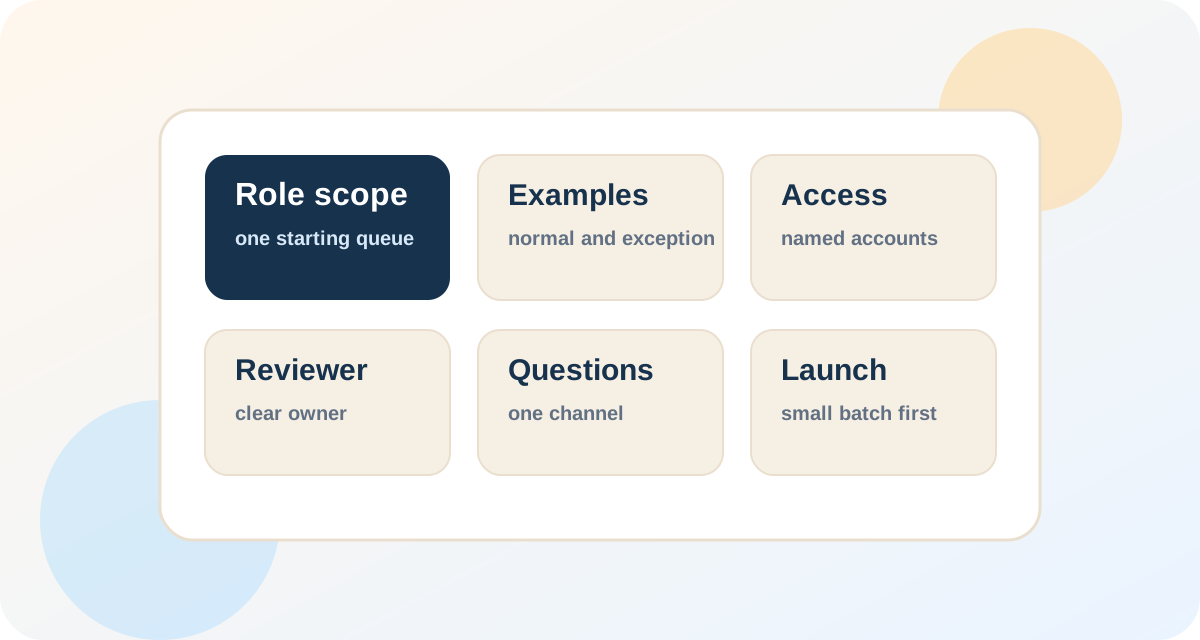
Short answer
A ecommerce operations assistant role should start with one repeatable queue, a few redacted examples, written stop rules, limited access, and a named reviewer. The role is ready when a candidate can explain the task, finish point, exception path, and approval boundary without guessing.
What to settle first
- Choose one recurring queue before adding side tasks.
- Use examples that show normal work and exceptions.
- Keep sensitive approvals with a named manager.
- Write access and review rules before candidate matching.
Start with the queue
A useful ecommerce operations assistant role begins with a staffing plan and one queue that repeats often enough to document. Write the exact result, the system involved, the expected finish point, and the manager who checks the work. This keeps the role from turning into a broad assistant request before anyone understands the first handoff.
Collect examples before you interview. Use one clean example, one messy example, and one item that should stop for manager review. These examples help a Filipino candidate show judgment against real work instead of trying to impress with software names.
If the queue cannot be explained in a few examples, it is not ready for a full handoff. Break it into a smaller lane and write the review rule first.
Set the stop rules
Stop rules tell the team member when not to continue. They should cover unusual customer demands, sensitive records, access changes, payments, refunds, contracts, legal questions, and any message that could affect the business relationship.
A good rule is specific. Instead of saying to ask when something seems important, write the signs that make an item unusual. That might be a missing approval, a customer complaint, a data mismatch, or a request that changes a business commitment.
Stop rules protect the worker as much as the business. The Filipino team member can move repeatable work forward while the manager keeps authority over decisions that require context.
Prepare the working examples
Examples should be redacted, current, and close to the work the person will see after launch. A sample from a different department can confuse the role and create false confidence.
Write a short note under each example explaining what was done well. Then add one correction note showing what would make the work unacceptable. The correction note is often more useful than the clean sample because it defines the boundary.
Store examples where the reviewer and the team member can find them. Avoid relying on old chat threads because instructions get buried and become hard to audit.
Limit access before launch
Access should match the first queue only. Named accounts, CISA multifactor authentication guidance, and a manager-owned removal step are safer than shared logins or broad permissions.
Write the system, permission level, owner, and removal step in the role brief. This makes it easier to change access when the role expands or when a worker leaves.
Do not add every tool on the first day just because the person may need it later. Start with the smallest useful access set and expand only when the queue is stable.
Use review notes to improve the role
The reviewer should check a small sample of work and write corrections into the instructions. Verbal feedback can help, but written notes make the next batch easier to inspect.
Track repeated questions. If the same issue appears more than once, improve the example or the stop rule instead of treating each question as a new problem.
Review notes also help compare candidates or replacements later. The business keeps a record of what good work means for the role.
Know when to add more work
Add work when the first queue is accurate, questions are predictable, and the reviewer can explain the standard without extra calls. Expanding earlier creates noise and makes it harder to know which part of the role is failing.
New tasks should follow the same pattern: examples, limits, access, owner, and review notes. If a new task needs different approvals or tools, compare it with ecommerce operations before treating it as the same lane.
A clear expansion path helps the Filipino team member grow without guessing. It also helps the business avoid handing over judgment-heavy work too early.
Review the plan before publishing the role
Before a staffing request goes out, read the plan as if you were the person doing the work. The plan should answer what starts first, what a finished item looks like, which systems are allowed, and which decisions require a manager. If those answers are scattered, the role is not ready for candidate review.
Ask one manager who is not involved in the project to read the brief and explain the role back in plain language. Confusion during that review is useful because it finds gaps before the worker receives live tasks. Update the examples and stop rules while the role is still easy to adjust.
A final review also keeps the article useful for later hiring. The same role brief can support replacement, backup coverage, or a second hire because the business has already written down the operating standard.
Role brief fields to finish
Use these fields as a readiness check before candidate review.
first queue
One recurring lane with examples.
examples
Normal, messy, and stop-rule examples.
reviewer
A named owner checks early output.
shared logins
Use named access and removal steps.
These fields are planning controls. They do not replace legal, security, or compliance review for sensitive work.
Loose brief versus useful brief
Mini-scenario: turning work into a role
A manager wants help with ecommerce operations assistant, but the first request is too broad. The better plan names one queue, shows three examples, and marks the cases that need manager approval.
During candidate review, each person explains how they would handle the same sample. The business can compare accuracy, judgment, and clarity before giving live access.
Questions buyers ask
Q: How narrow should the first queue be?
A: It should be narrow enough to explain with examples and inspect with a short review routine.
Q: Can the role expand later?
A: Yes. Add work after the first queue is accurate, documented, and easy for a reviewer to check.
Q: Who should approve exceptions?
A: A named manager should approve sensitive decisions, access changes, unusual requests, and business commitments.