
Philippines hiring guide
Launch checklist for a Filipino team member
Set up access, examples, question paths, and review time before handing over a full queue.
Short answer
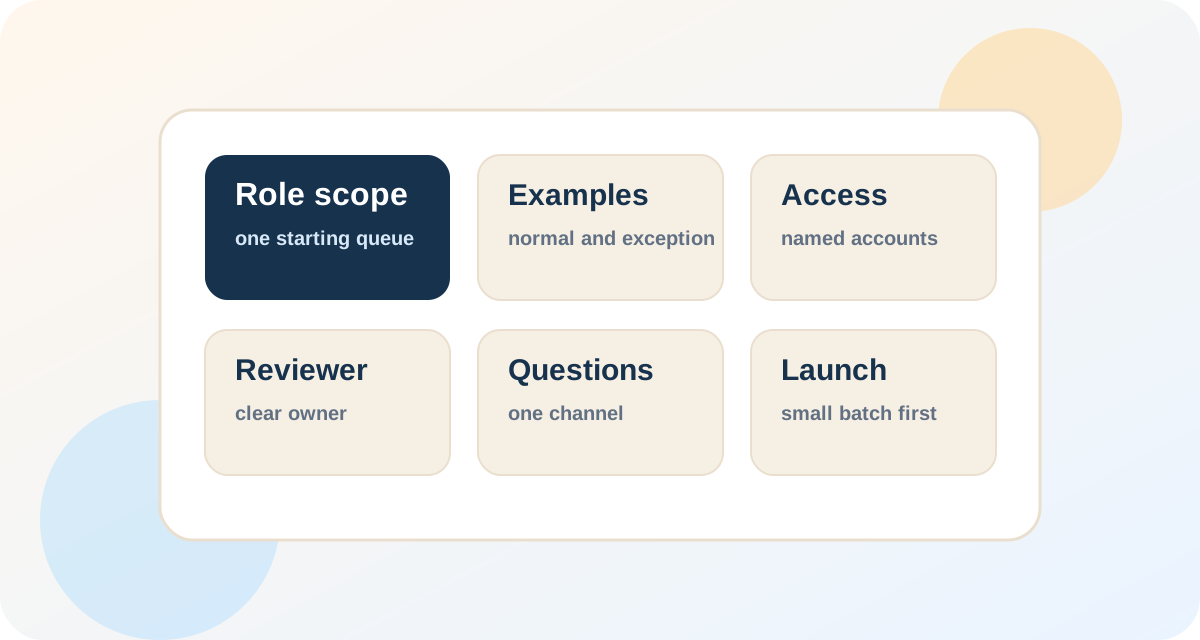
A good launch checklist gives the Filipino team member examples, limited access, a question path, and a review rhythm before a full queue is assigned. The goal is controlled learning with real work samples, not a broad handoff on the first login.
What to settle first
- Prepare examples and stop rules before account access.
- Use named accounts, CISA multifactor authentication guidance, and manager-owned permissions.
- Review provider questions and a small sample of real work before increasing volume.
- Close the loop by updating the SOP after repeated questions.
Prepare the work before access
Before the first login, gather the task queue, sample outputs, stop list, tool list, and reviewer name. A short checklist prevents the launch from turning into a series of chat messages that disappear as soon as work gets busy.
Use redacted samples wherever possible. Show one correct item, one messy item, and one item that should stop for approval. Review provider questions if an outside team will help manage that review.
Set up limited accounts
Create named accounts for the systems needed by the first queue only. Follow CISA multifactor authentication guidance where available and share credentials through an approved password manager. Do not send shared passwords through email or chat.
Record each permission in an access list. Include the system, permission level, owner, reason, approval date, and removal step. This makes it easier to review access when the role changes or ends.
Use small batches of real work
Start with a limited set of real items and review the output in writing. The reviewer should explain what was correct, what changed, and which part of the SOP needs improvement. A written correction becomes training material for the next similar item.
Keep the same queue long enough to see patterns. If questions repeat, the process is unclear. Update the examples or stop list before increasing volume.
End the launch with a decision
After the first controlled batch, review completed samples, open questions, errors, response time, access, and manager effort. Decide whether to keep the lane, change the instructions, pause the handoff, or add an adjacent task.
Remove access that is no longer needed. A launch checklist should include offboarding and role-change steps because access often grows over time unless someone owns the cleanup.
Give feedback where the work happens
Feedback is most useful when it points to the exact item, field, reply, or record that needs correction. A general note such as be more careful does not help the Filipino team member repeat the right action next time.
Open a completed sample and mark what was right, what changed, and why the change matters. Then add the correction to the SOP or example library so the next similar item is easier to handle.
This review style also protects the manager from repeating the same training in calls. Written corrections become part of the operating system for the role.
Close access loops as the role changes
Access should match the current task lane, not every possible future task. If the launch starts with tagging messages, the worker may not need export rights, billing tools, or administrator permissions.
When a task is removed, a tool changes, or a worker leaves, the access list should show what to remove and who owns the removal. The same list should also show which permissions were approved and why they were needed.
This is part of the launch process, not a separate technical chore. A controlled role is easier to expand when account ownership and removal steps are already visible.
Review the plan before publishing the role
Before a staffing request goes out, read the plan as if you were the person doing the work. The plan should answer what starts first, what a finished item looks like, which systems are allowed, and which decisions require a manager. If those answers are scattered, the role is not ready for candidate review.
Ask one manager who is not involved in the project to read the brief and explain the role back in plain language. Confusion during that review is useful because it finds gaps before the worker receives live tasks. Update the examples and stop rules while the role is still easy to adjust.
A final review also keeps the article useful for later hiring. The same role brief can support replacement, backup coverage, or a second hire because the business has already written down the operating standard.
Launch checklist items
Use these items to confirm the role is ready for controlled live work.
sample types
Normal, messy, and stop-for-review examples.
question channel
One place for questions and decisions.
review owner
A named manager checks the first batch.
access removal
Permissions are removed when the role changes or ends.
These checklist items are controls, not promises of speed or outcome.
Loose launch versus controlled launch
Mini-scenario: launching a records role
A company wants a Filipino team member to clean weekly CRM records. The launch starts with a redacted export, a field guide, and three known problem records. The worker practices on the sample before receiving limited CRM access.
The reviewer checks ten live records and finds that one status field is confusing. Instead of adding more volume, the reviewer updates the field guide and asks the worker to redo the confusing records. The next batch expands only after the corrected sample is accurate.
Questions buyers ask
Q: What should happen before the first login?
A: Prepare examples, stop rules, access limits, MFA, password-manager sharing, a reviewer, and a place for questions.
Q: How much work should be assigned at launch?
A: Start with a small batch that can be reviewed quickly. Increase volume only after the first queue is accurate and the SOP is updated.
Q: Who removes access if the role changes?
A: The business should name an account owner and record the removal step for each system before access is granted.