
Philippines hiring guide
Questions to ask before hiring Filipino talent
Use these questions before you sign with a provider or freelancer.
Short answer
Ask for proof of how the provider screens, manages, and protects access. A polished candidate profile is useful, but it does not tell you who checks the work or what happens when something goes wrong.
What to settle first
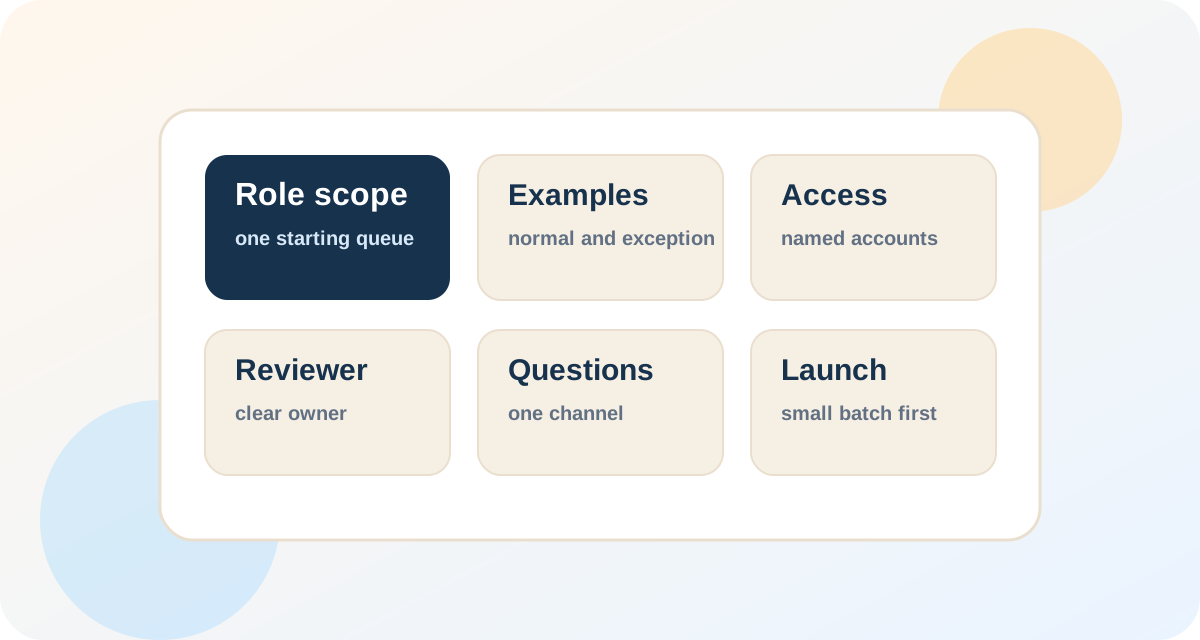
- Give the provider a real task sample instead of relying on a general interview.
- Name the person who will review work, attendance, and account access after launch.
- Ask what happens if the first hire is absent, misses the mark, or leaves.
- Keep owner approval for refunds, payments, policy exceptions, and other sensitive calls.
Start with the work, not the resume
Send the provider two or three examples from your staffing plan before candidate review. For customer support, that might be a difficult ticket, a refund request, and an order-status message. For admin work, use a calendar conflict or a messy spreadsheet. Ask the candidate to explain what they would do and when they would stop to ask for help.
A small paid work sample tells you more than a long list of software names. Score the sample for accuracy, writing, judgment, and whether the person followed the instructions. Use the same scorecard for every candidate so a friendly interview does not outweigh weak work.
Find out who manages the day-to-day work
Ask who checks attendance, reviews early work, and speaks with the team member when quality slips. Compare the answer with your launch checklist. If the answer is simply "the client manages everything," you are buying recruiting help, not managed staffing. That can still work, but the scope and your time commitment should match the service.
Also ask how the provider handles holidays, internet outages, sick days, and planned leave in the Philippines. You do not need a promise of perfect coverage. You need a plain process: who sends the notice, how soon you hear about it, and whether backup help is available for urgent queues.
Set access rules before the first login
List every system the role may use, then give only the access needed for the first set of tasks. Microsoft describes this as least-privilege access: people and systems get only the permissions needed to do the job. NIST cyber risk controls also treat identity and access control as part of managing cyber risk, not as a setup chore to forget after launch.
Ask whether the provider requires multifactor authentication, where passwords are stored, and how access is removed when a worker leaves. CISA recommends long, unique passwords and a password manager. Your provider should be able to explain how that advice shows up in its daily process without hiding behind a vague claim that its systems are secure.
Agree on the launch review
The launch period should be narrow. Start with a few repeatable tasks, sample answers, and daily checks. Add work only after the first tasks are steady. At the launch review, review accuracy, response time, attendance, questions raised, and the amount of manager time the role still needs.
Ask the provider to put the replacement process in writing. Find out what starts a replacement, whether there is another fee, who keeps the work moving, and how account access is closed. A replacement promise means little if there is no handoff plan or expected response time.
Compare the choices
Script for the provider call
"Before you send candidates, please show me how you would screen for this role. Who will check the launch period of work? Please include your process for absences, replacement, password access, and removing access when someone leaves."
Ask for the owner of each step, not a general assurance. Save the answer beside the role brief before you approve candidates.
Questions buyers ask
Q: Should I hire through a provider or hire a Filipino freelancer directly?
A: A direct hire can give you a direct relationship, but your team handles screening, contracts, payroll, management, and replacement. A provider may cover some of that work. Ask exactly what is included before comparing service models.
Q: How many candidates should I interview?
A: There is no useful fixed number. Review enough candidates to compare work samples against the same scorecard. Two strong, well-screened candidates can be more useful than ten loosely matched profiles.
Q: What should stay with the business owner?
A: Keep final control of payments, refunds above a set limit, policy exceptions, legal or HR decisions, account ownership, and changes to sensitive permissions. Write these limits into the SOP.
Q: What should I measure during the first month?
A: Track a few measures tied to the work, such as accuracy, response time, completed tasks, reopened tickets, attendance, and questions that required manager help. Review the numbers with samples of the actual work.