
Philippines hiring guide
What belongs in a Philippines staffing plan?
The role details worth settling before you review candidates.
Use this before asking for candidates or comparing provider fit.
The article shows how to keep decisions and access limits clear.
The links stay editorial and avoid action anchors in the article body.
Short answer
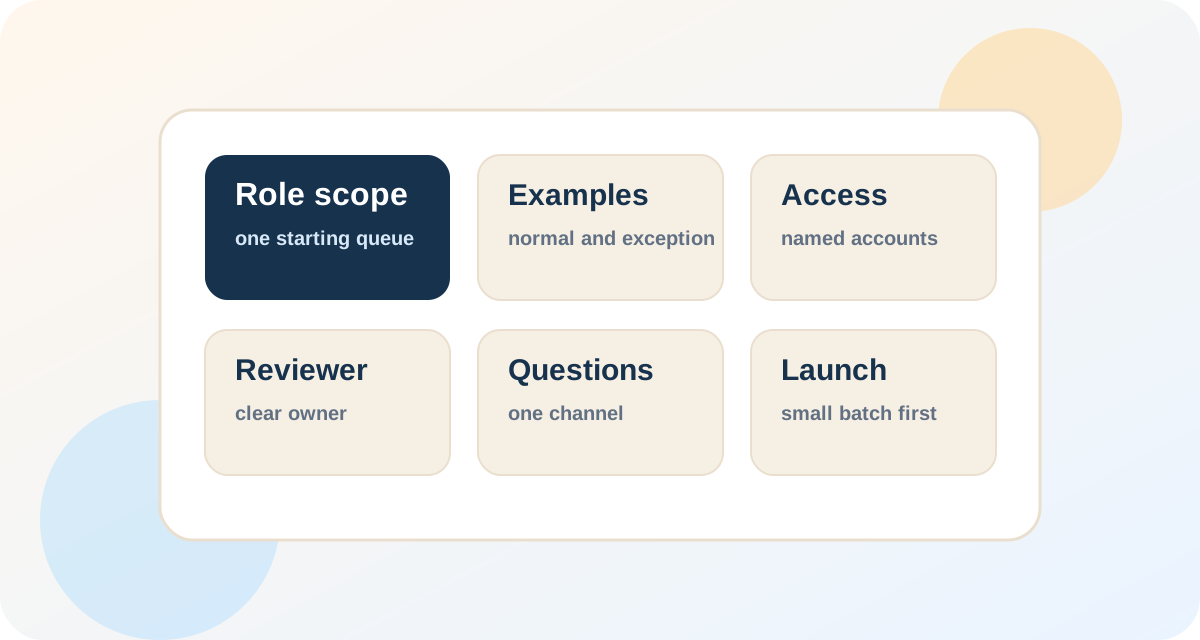
A Philippines staffing plan should name one starting queue, the work examples, the manager who reviews output, the access limits, and the schedule overlap. The plan is ready only when a candidate can see what finished work looks like and when to stop for approval.
What to settle first
- Start with one repeatable queue rather than a broad assistant title.
- Attach real examples and one exception so candidates understand the standard.
- Keep payments, refunds, policy exceptions, and sensitive access with a named owner.
- Write the review path before the first live handoff.
Define the first queue in plain language
The first task queue should be narrow enough to check. Instead of writing that a Filipino team member will help with operations, write the result: update order records before a cutoff, prepare a customer-reply draft, clean a weekly spreadsheet, or tag tickets that need a manager decision.
Add 3 to 5 redacted examples. Include one normal item, one messy item, and one case that should stop for review. The examples keep the role from becoming a vague list of errands and give the candidate a fair way to show judgment.
Separate work execution from owner decisions
A staffing plan should say which work the team member may complete and which decisions stay with the business. The worker may prepare a refund record, summarize a vendor issue, or draft a reply, while the manager keeps final control of money, policy, contracts, legal questions, and unusual customer demands.
This boundary protects both sides. The business keeps authority over risk, and the Filipino team member does not have to guess when a decision is outside the role. Put the stop list next to each task so it is easy to use during live work.
Write the schedule and review cadence
Show the working hours in Philippine Standard Time and in the client time zone, especially when the first handoff is a customer support workflow. If live questions matter, include the daily overlap window and the place where questions should be posted. A schedule that looks clear to the client can still be confusing if the time zones are not written side by side.
Choose one reviewer before launch. That person should inspect a small sample of completed work, answer repeated questions, and update the instructions. If no one owns review, the role is not ready for more volume.
Control access before candidate matching
List the systems required for the first queue and leave the rest out. Named accounts, multifactor authentication, and a password manager are better than shared logins in chat. Keep an access list with the system, permission level, owner, approval date, and removal step.
Do not wait until after selection to think about access. The role plan should explain whether the person can view records, edit records, send replies, export data, approve actions, or invite other users. Most starting roles need less permission than the job title suggests.
Use the plan during interviews
The staffing plan should not sit in a folder after it is written. Use it during interviews so every candidate answers against the same work, tools, limits, and review process.
Ask the candidate to explain how they would handle a normal item and an exception. The answer shows whether the plan is clear enough for real work, and it also shows where the instructions need another example.
If several candidates misunderstand the same part, do not blame the candidates first. Rewrite that part of the plan before moving forward, because the same confusion will appear after launch.
Keep the plan easy to maintain
A useful plan is short enough for a manager to update when the work changes. SBA hiring guidance also points business owners back to clear responsibilities and management routines. Put long policy details in a linked SOP, then keep the article-like role plan focused on outcomes, limits, owners, and review.
Review the plan whenever the queue changes, a new tool is added, or a manager gives the same correction more than once. Small edits prevent the role from drifting into work that was never approved.
The plan also helps replacement or backup support. A new person can see the queue, examples, permissions, and decision boundaries without relying on scattered chat history.
Review the plan before publishing the role
Before a staffing request goes out, read the plan as if you were the person doing the work. The plan should answer what starts first, what a finished item looks like, which systems are allowed, and which decisions require a manager. If those answers are scattered, the role is not ready for candidate review.
Ask one manager who is not involved in the project to read the brief and explain the role back in plain language. Confusion during that review is useful because it finds gaps before the worker receives live tasks. Update the examples and stop rules while the role is still easy to adjust.
A final review also keeps the article useful for later hiring. The same role brief can support replacement, backup coverage, or a second hire because the business has already written down the operating standard.
Staffing plan readiness table
Use this table before candidate review. If a row is weak, tighten the plan before adding people or access.
Planning fields to complete before outreach
Use these fields as a practical readiness check before interviewing candidates or asking a provider for profiles.
starting queue
The first handoff should be easy to explain and inspect.
sample items
Use redacted examples from real work, not abstract instructions.
named reviewer
One owner answers questions and checks early output.
shared passwords
Use named access and a manager-owned removal process.
These are planning controls, not performance promises. Sensitive work may require legal, security, or compliance review before access is granted.
Weak plan versus useful plan
Mini-scenario: planning a support inbox role
A business wants Filipino support help because the owner spends too much time reading routine customer messages. The first queue is not all support. It is only order-status replies, message tagging, and escalation notes for refunds or policy exceptions.
The plan includes five redacted examples, a reply library, a stop list, and a daily review owner. After candidates complete the same sample task, the business can compare accuracy and judgment instead of choosing based on a polished interview alone.
Questions buyers ask
Q: What should be in a Philippines staffing plan?
A: Include the starting task, examples, access limits, schedule, manager, review method, and decisions that stay with the business owner.
Q: Should the plan list every future task?
A: No. Start with the first queue and note possible later tasks separately. Expanding too early makes review harder.
Q: Who should own quality checks?
A: A named client-side reviewer should check real samples and write corrections into the process.