
Philippines hiring guide
Which tasks should a Filipino team take on first?
Choose recurring work with good examples, a clear owner, and low risk when something goes wrong.
Short answer
The best first tasks for a Filipino team are repeatable, example-backed, easy to review, and low risk if paused for approval. Start with admin, support, records, follow-up, or reporting work before assigning judgment-heavy decisions.
What to settle first
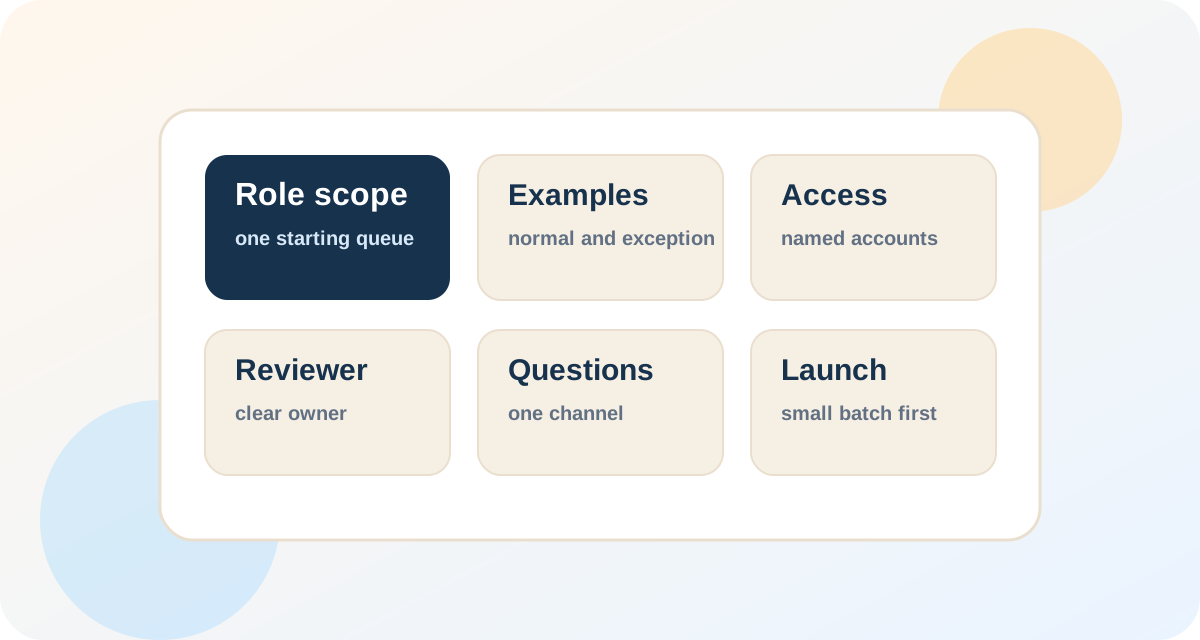
- Pick recurring work with a clear finish point.
- Keep sensitive decisions with your internal owner.
- Use examples and a scorecard before widening the role.
- Add a second task only after the first queue is stable.
Choose work that repeats
Inbox triage, routine replies, CRM cleanup, record formatting, calendar preparation, reporting support, and follow-up lists are practical first handoffs because the same pattern appears again and again. A launch checklist keeps the first handoff controlled while the reviewer gathers enough samples to see whether the process is working.
Avoid starting with a task that changes every time. If each item needs a new judgment call, the worker will spend more time asking for decisions than completing useful work. Use a launch checklist before adding access, and keep the first queue simple enough to explain in one page, then add it to the staffing plan.
Keep high-risk decisions internal
A Filipino team member can prepare a refund summary, but the refund limit should stay with the business. They can draft a supplier message, but contract changes and policy positions should stay with the account owner. Use CISA multifactor authentication guidance when the role touches live systems, and make the stop rule clearer as decisions become more sensitive.
This does not mean the role is low value. Preparing work, organizing evidence, drafting replies, and flagging exceptions can save manager time while keeping final authority in the right place.
Use samples to check readiness
Before assigning live work, give the candidate a small task sample using the same instructions you would use after launch. Ask them to show the result, explain any exception, and identify the point where they would ask for help.
Score accuracy, clarity, judgment, and whether the person followed the process. A candidate who asks the right question at the right time can be safer than one who tries to handle everything alone.
Expand only after the first lane is steady
A common failure is adding tasks because the first few items went well. Hold the first lane long enough to find repeated questions, edge cases, and manager time requirements. Then update the SOP before adding the next lane.
When you do add work, choose an adjacent task that uses the same tools or context. Moving from ticket tagging to routine ticket drafts is easier than jumping from support to bookkeeping or outbound sales.
Turn each task into a reviewable unit
A task is easier to outsource when the reviewer can inspect the result without recreating the whole process. Define the input, the expected output, the place where the result is saved, and the signal that marks the item as complete.
For example, a support task may start with tagging messages and drafting replies, while the manager keeps approval for refunds. A reporting task may start with preparing the spreadsheet, while the manager keeps the final interpretation.
This keeps the Filipino team member focused on work that can be repeated and checked. It also gives the manager a fair way to decide whether the task is ready for more volume.
Review the plan before publishing the role
Before a staffing request goes out, read the plan as if you were the person doing the work. The plan should answer what starts first, what a finished item looks like, which systems are allowed, and which decisions require a manager. If those answers are scattered, the role is not ready for candidate review.
Ask one manager who is not involved in the project to read the brief and explain the role back in plain language. Confusion during that review is useful because it finds gaps before the worker receives live tasks. Update the examples and stop rules while the role is still easy to adjust.
A final review also keeps the article useful for later hiring. The same role brief can support replacement, backup coverage, or a second hire because the business has already written down the operating standard.
Task selection scorecard
Use this simple scorecard to compare candidate tasks before choosing the first handoff.
repeat rate
The task appears often enough to justify training.
finish point
The worker can tell when the item is done.
approval risk
Mistakes can be caught before customer, money, or policy impact.
review sample
A manager can inspect a small set quickly.
A task does not need every score to be perfect, but weak tasks should stay off the launch checklist until the process is clearer.
Good first tasks versus risky first tasks
Mini-scenario: choosing between three tasks
A founder wants help with customer email, bookkeeping, and appointment scheduling. The safest first handoff is customer email tagging because examples already exist, the owner can review a sample, and refunds stay internal.
Bookkeeping prep may be second after access rules are written. Appointment scheduling may wait until calendar rules and rescheduling authority are clear. The sequence is based on reviewability, not which task feels most annoying.
Questions buyers ask
Q: What tasks are easiest to outsource first?
A: Start with repeat admin, support, records, scheduling prep, reporting, or follow-up work that has examples and a clear reviewer.
Q: Should I outsource sales calls first?
A: Only if scripts, compliance rules, recording/review, and escalation paths are already clear. Otherwise begin with research, list cleanup, or call prep.
Q: How do I know when to add more tasks?
A: Add tasks after the first queue is accurate, questions have decreased, and the SOP reflects real exceptions.