
Philippines hiring guide
How to plan Filipino third-party due diligence response register support
Track approved response sources without making assurances or inventing governance claims.
Short answer
Build third-party due diligence response register around a defined source packet, tested exception, minimum access, and named risk or compliance owner.
What to settle first
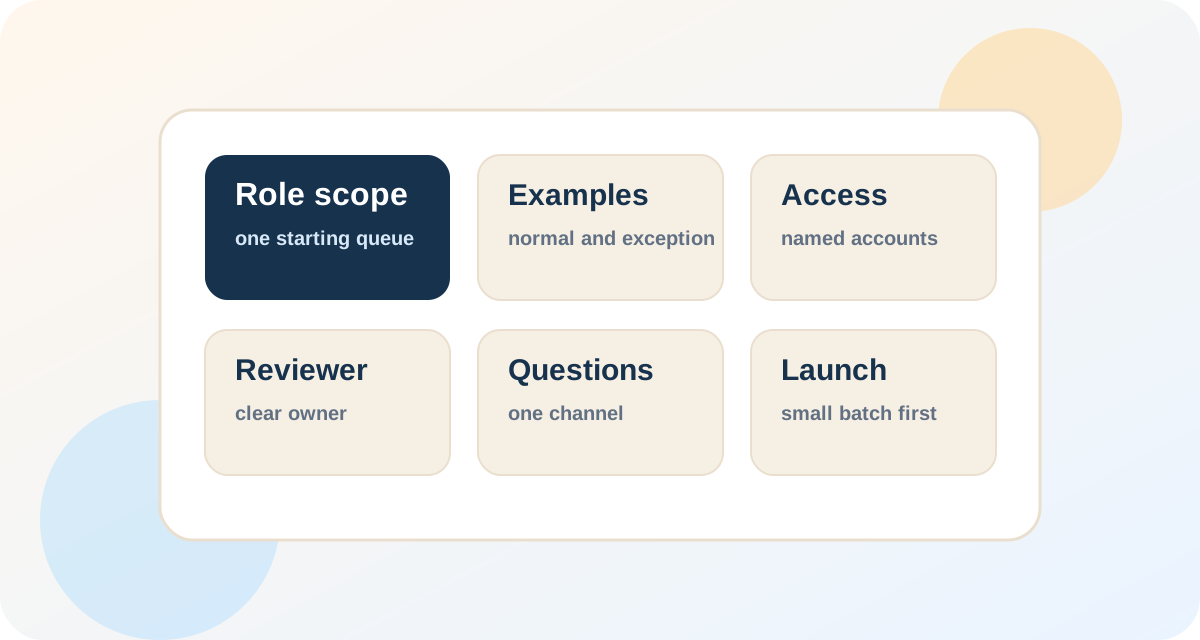
- Define evidence and the finish point.
- Keep missing and conflicting inputs visible.
- Route decisions to the risk or compliance owner.
- Expand after source-based review is repeatable.
Define the source packet
A third-party due diligence response register queue begins with request version, question, approved response source, evidence owner, review date, sharing restriction, exception, and status. Record the location, version, and checking time for each consequential field.
Completeness means ready for review, not approved. Keep the risk or compliance owner beside every decision state.
Rehearse a real exception
Test this case before launch: an approved response cites a process that changed after its last review date. Preserve both records, state the difference without inference, pause action, and route one focused question.
Also review an ordinary and an incomplete example. Put corrections into the controlled instruction, not only private chat.
Control access and handoffs
Grant named, minimum access for third-party due diligence response register, with purpose, approver, review date, and removal path.
A handoff identifies the last source checked, open difference, current state, next owner, and approved substitute.
Sample evidence against the source
Compare prepared packets with original evidence. Classify returns as missing input, transcription error, stale source, conflict, unclear instruction, or out-of-scope judgment.
Count arrivals, gaps, conflicts, returns, owner waits, and unresolved age. These are queue signals, not outcome guarantees.
Expand only after repeatable review
A second reviewer should explain the intake, finish point, source hierarchy, stop case, access boundary, and risk or compliance owner path.
Treat a new system, data class, audience, or decision as a scope change and review it before adding volume.
Questions buyers ask
Q: What can the role complete?
A: The role can prepare and route the documented evidence packet.
Q: Who resolves exceptions?
A: The risk or compliance owner resolves exceptions and authorizes action.
Q: What should launch review cover?
A: An ordinary record, an incomplete record, and the stop case.