
Philippines hiring guide
What a Filipino Subscription Dunning Coordinator Can Safely Own
Keep failed-payment follow-up orderly without handing over credit, cancellation, or account-change authority.
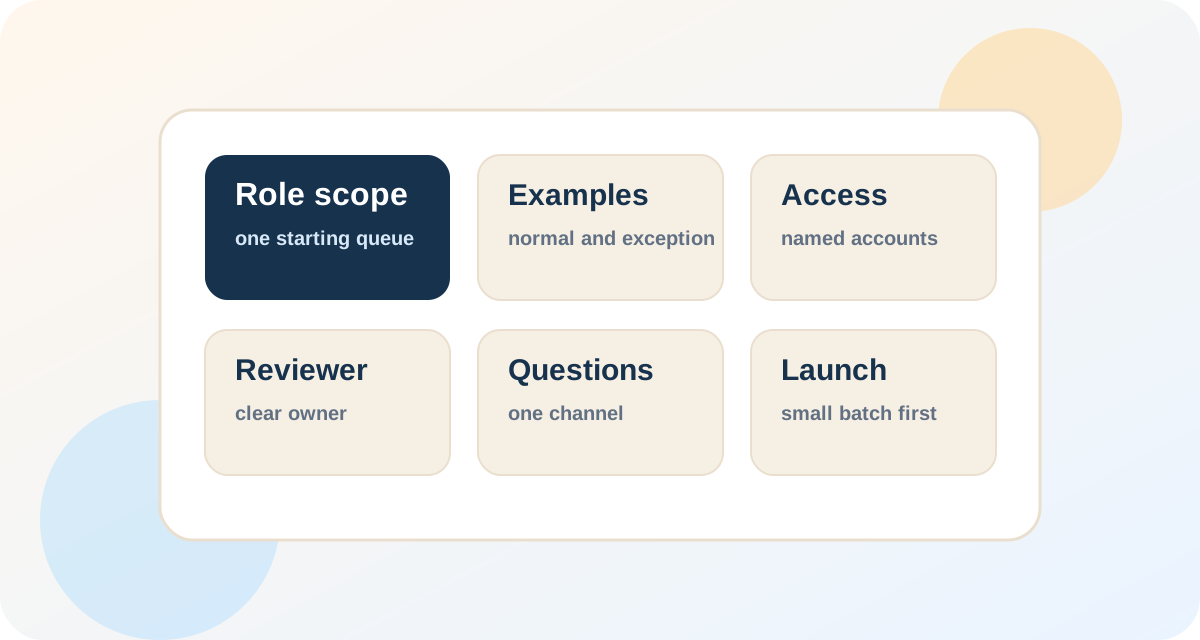
Short answer
A Filipino coordinator can support subscription dunning case coordination when the record, stop rules, access limits, and billing owner are explicit.
What to settle first
- Name the source and required field for every item.
- Keep missing and conflicting evidence visible.
- Route consequential decisions to the billing owner.
- Review corrections and exceptions before scaling.
Start with the work record
Define subscription dunning case coordination as a bounded queue. The working record should contain account, failed charge, approved message, attempt history, customer reply, next review date, and decision state. Missing information stays visibly missing; it is not guessed from a nearby case.
Give each item a source link, current state, last action, and next owner. That lets another shift reconstruct the handoff without relying on private messages.
Write the stop rule before launch
Pause and route the item when a customer disputes the charge, requests hardship terms, or asks to cancel. The billing owner decides what happens next.
A coordinator can gather, compare, label, and route approved facts. The role does not approve exceptions, interpret professional requirements, change money or access, or make external commitments.
Rehearse a difficult item
A long-standing customer says the card is valid and claims the latest invoice contains an unapproved add-on. Preserve both records, describe the difference in neutral language, and ask the owner one focused question.
Test this case beside an ordinary record and an incomplete record. If reviewers choose different states, revise the written example before increasing volume.
Keep access proportional
Use named accounts, minimum permissions, multifactor authentication where available, and an agreed access-removal trigger. Store evidence in the approved system rather than personal files or chat.
Training examples should remove unnecessary personal, financial, health, or commercial information. Record who may view, edit, export, and approve each data class.
Make corrections visible
Retain the prior value, corrected value, source, reason, actor, and time. Silent replacement hides the path a reviewer needs to understand the case.
A clean handoff states what changed, what remains uncertain, which action is paused, and who owns the decision.
Measure the queue honestly
Track eligible volume, complete packets, exception categories, correction events, and time waiting for the billing owner. Report the observation window, exclusions, and instruction version.
Do not turn queue counts into claims about worker quality or business outcomes. Missing inputs, unclear rules, system failures, and owner wait time need separate labels because they call for different fixes.
Questions buyers ask
Q: What can the coordinator complete?
A: The coordinator can prepare and route the defined subscription dunning case coordination record.
Q: Who decides an exception?
A: The billing owner retains consequential decision and approval authority.
Q: How should the first week be reviewed?
A: Compare ordinary, incomplete, and conflicting items with their original sources each day.