
Philippines hiring guide
How to plan Filipino social content approval register support
Track approved social copy and assets while brand owners retain claim, response, and publication decisions.
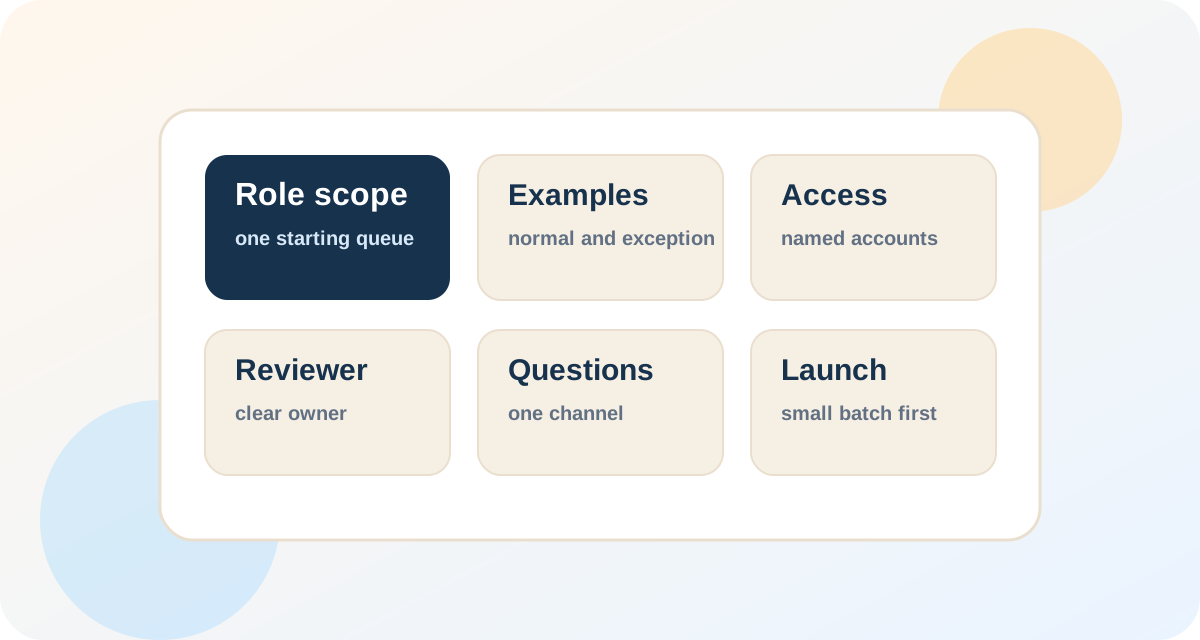
Short answer
Scope social content approval registration around a defined evidence packet, one rehearsed exception, minimum access, and a named brand or marketing owner.
What to settle first
- Define what a complete packet contains.
- Show ordinary, incomplete, and conflicting examples.
- Keep decisions with the brand or marketing owner.
- Expand only after another reviewer can reproduce the handoff.
Name the packet before the role
Start social content approval registration with a concrete packet: the draft, channel, asset, claim source, audience, approver, scheduled time, and revision history. A broad job title will not tell a Filipino team member which evidence is enough to move an item forward.
Give every field a source and checking time. If a required item is absent, use a visible missing state instead of filling the gap from memory.
Test the awkward case before launch
An approved caption is paired with a later image containing a new numerical claim. The useful response is to preserve both records, describe the conflict in neutral language, and send one focused question to the owner.
Run that case beside an ordinary item and an incomplete one. These examples expose hidden rules while access and volume are still small.
Design a handoff another shift can use
A clean handoff states the last source checked, current status, unresolved difference, next owner, and action that must wait. Avoid notes such as “handled” that hide what actually happened.
Use named accounts, minimum permissions, multifactor authentication where available, and a dated removal path. Sensitive evidence should stay in the approved system.
Review evidence, not busyness
Sample completed packets against their original sources and track posts held for asset, claim, version, or scheduling conflicts. Pair every count with a defined period and total queue volume.
Return reasons should distinguish missing input, transcription error, stale source, conflicting evidence, unclear instruction, and work outside the role. That makes the operating guide easier to repair.
Decide whether the lane is ready to grow
Expansion is sensible only when a second reviewer can reproduce the packet, explain the stop rule, and locate the brand or marketing owner without private context.
A new system, audience, data class, or decision changes the risk of the work. Treat it as a new scope review, even when the task looks similar.
Questions buyers ask
Q: What may the assistant complete?
A: The assistant may prepare and route the documented social content approval registration packet.
Q: Who decides an exception?
A: The brand or marketing owner keeps decision and approval authority.
Q: What should the first review include?
A: Compare an ordinary item, an incomplete item, and the rehearsed conflict with their original sources.