
Philippines hiring guide
How a Filipino Fleet Maintenance Records Coordinator Should Work
Keep service records and due signals complete without assigning roadworthiness or repair approval to the coordinator.
Short answer
A Filipino assistant can support fleet maintenance record coordination when entry rules, evidence fields, stop conditions, and the fleet or safety owner are documented.
What to settle first
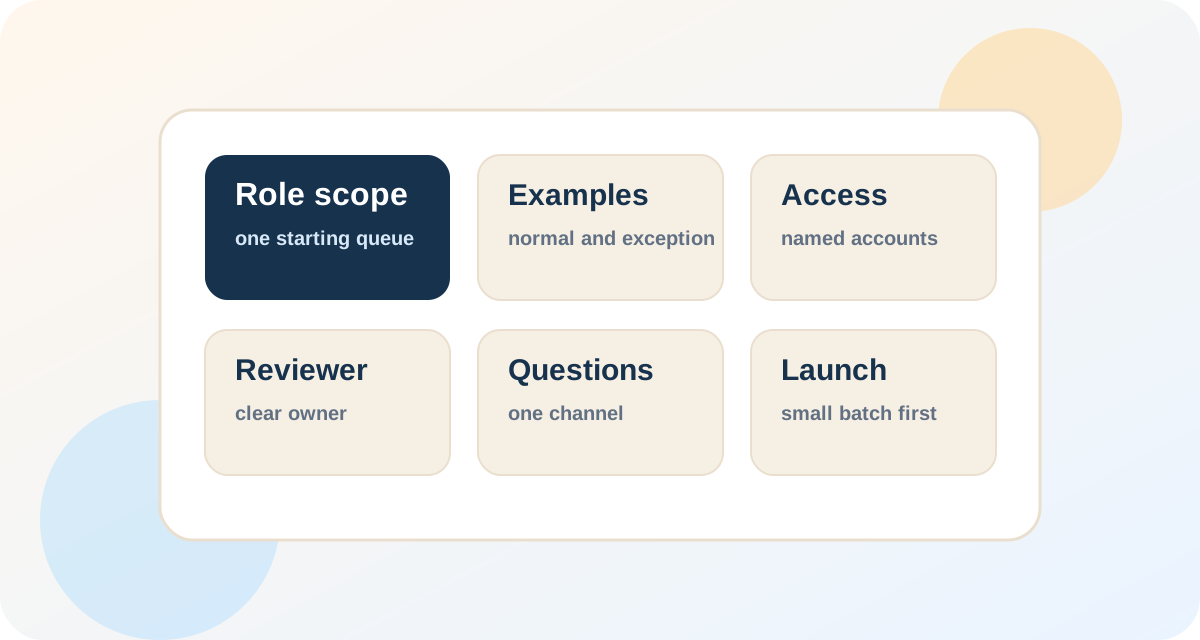
- Define eligibility and completion in writing.
- Preserve missing and conflicting source evidence.
- Keep approval with the fleet or safety owner.
- Audit consecutive cases under a dated instruction version.
Define the queue before assigning it
fleet maintenance record coordination starts with a written eligibility rule. Each record should contain vehicle, mileage source, service type, due rule, work order, vendor evidence, completion state, and next review. A missing field remains an exception instead of being filled from memory or a similar account.
State which channels are approved, when a record enters the queue, and which event marks administrative completion. The role prepares a reviewable packet; it does not inherit the authority attached to the underlying business process.
Separate preparation from approval
The assistant may retrieve approved records, compare stated fields, label a client-defined condition, request missing evidence, and route the packet. The fleet or safety owner keeps the consequential decision.
Pause when a safety complaint appears, service evidence is incomplete, mileage conflicts, or continued operation needs a decision. The escalation should quote the conflicting source, name the blocked action, and ask one answerable question.
Test the boundary with a real-looking case
A van passed its calendar service date, while the telematics mileage is lower than the workshop record and a driver reported braking noise. The assistant should preserve each source, record when it was retrieved, and describe the mismatch without choosing the preferred version.
Run this example during training along with a complete case and a case that lacks a required source. If two reviewers choose different routes, rewrite the rule and examples before adding volume.
Limit access to the work
Issue a named account with only the systems and actions required for fleet maintenance record coordination. Use multifactor authentication where the system supports it, keep exports off personal devices, and set a removal trigger before access begins.
Mask fields that the task does not require. A record may be operationally useful without exposing every personal, financial, health, legal, or commercial detail held by the client.
Preserve changes and handoffs
A correction log should retain the former value, new value, supporting source, reason, actor, and time. Overwriting the earlier state removes evidence that the fleet or safety owner may need later.
At shift handoff, show items received, packets completed, exceptions waiting, approaching deadlines, and the named owner for each pause. Do not bury decisions in private chat.
Review the routine without inventing a benchmark
For the first week, review consecutive eligible items rather than a hand-picked set of clean records. Count missing sources, conflicting fields, correction events, owner wait time, and completed packets under one dated instruction version.
These observations describe that queue and period only. They do not prove worker quality, provider performance, savings, compliance, or business impact. Report exclusions and system outages beside the count.
Questions buyers ask
Q: What work can the assistant complete?
A: The assistant can prepare, document, and route the defined fleet maintenance record coordination packet.
Q: Who handles an exception?
A: The fleet or safety owner decides any consequential exception or approval.
Q: What should managers inspect first?
A: Review consecutive complete, incomplete, and conflicting cases against their original sources.