

Philippines hiring guide
How to Run a Filipino Digital Asset Rights Register
Link creative assets to approved usage evidence while legal and brand owners retain rights decisions.
Short answer
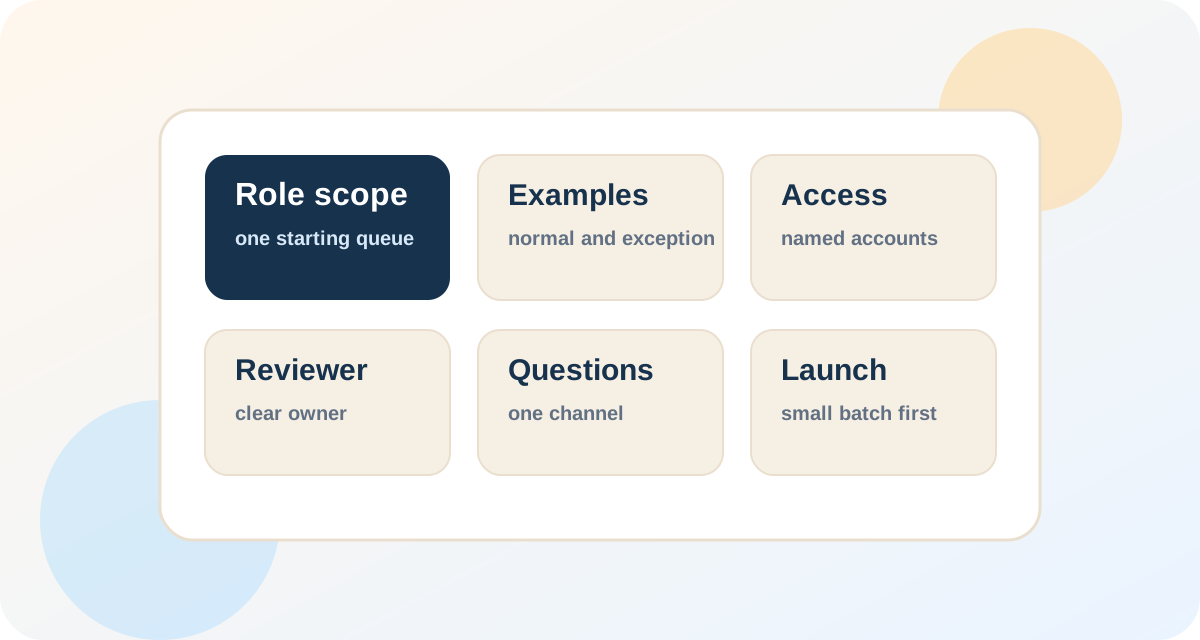
Scope digital asset rights registration around a defined packet, a rehearsed exception, minimum access, and a named brand or legal owner.
What to settle first
- Define the packet and acceptable source for each field.
- Rehearse ordinary, incomplete, and conflicting records.
- Keep decisions with the brand or legal owner.
- Scale only when another reviewer can reproduce the handoff.
Define the packet before assigning the queue
Treat digital asset rights registration as a record routine, not an open-ended job description. A complete packet contains the asset identifier, creator or supplier, license source, permitted channel, territory, term, attribution requirement, derivative state, and approver. Each field should point to an approved source or carry an explicit missing state.
Document the entry condition, completion condition, and the events that pause work. A coordinator can then hand off a consistent packet without inventing facts to keep the queue moving.
Test a conflict before launch
A stock image is cleared for web use, but a campaign brief also requests paid social and partner syndication. The safe response is to preserve both records, state the mismatch plainly, pause the affected action, and route one focused question to the owner.
Rehearse that example beside one ordinary item and one incomplete item. If two reviewers reach different queue states, revise the definition or example before adding volume.
Protect access and sensitive evidence
Use named accounts, minimum permissions, multifactor authentication where available, and an agreed removal trigger. Keep evidence in the approved system rather than duplicating it in chat or private files.
Mask unnecessary personal or commercial data in training examples. Record who can view, edit, approve, and export the packet, and review those permissions when the scope changes.
Make handoffs reproducible
A useful handoff names the last source checked, current state, unresolved difference, waiting owner, and paused next action. Labels such as “handled” or “done” do not let another shift reconstruct the result.
Use a dated instruction version and retain corrections. Quietly replacing an earlier record makes review easier to read but harder to trust.
Measure the routine without overclaiming
Track assets held for license, channel, territory, term, attribution, or approval gaps. Pair every count with its eligible volume, observation window, definition version, and exclusions.
Separate missing inputs, transcription errors, stale sources, conflicting evidence, unclear instructions, and owner-wait time. Those failure modes require different fixes and should not become a single worker score.
Questions buyers ask
Q: What can the coordinator complete?
A: The coordinator can prepare, document, and route the defined digital asset rights registration packet.
Q: Who decides an exception?
A: The brand or legal owner retains approval and consequential decision authority.
Q: What should the first quality review cover?
A: Compare an ordinary item, an incomplete item, and the rehearsed conflict against their original sources.