

Philippines hiring guide
How to scope Filipino customer data export packet coordination
Collect approved export evidence while privacy owners control identity, scope, redaction, and release.
Short answer
Build customer data export packet coordination around a defined packet, a tested exception, minimum access, and a named privacy or data-request owner.
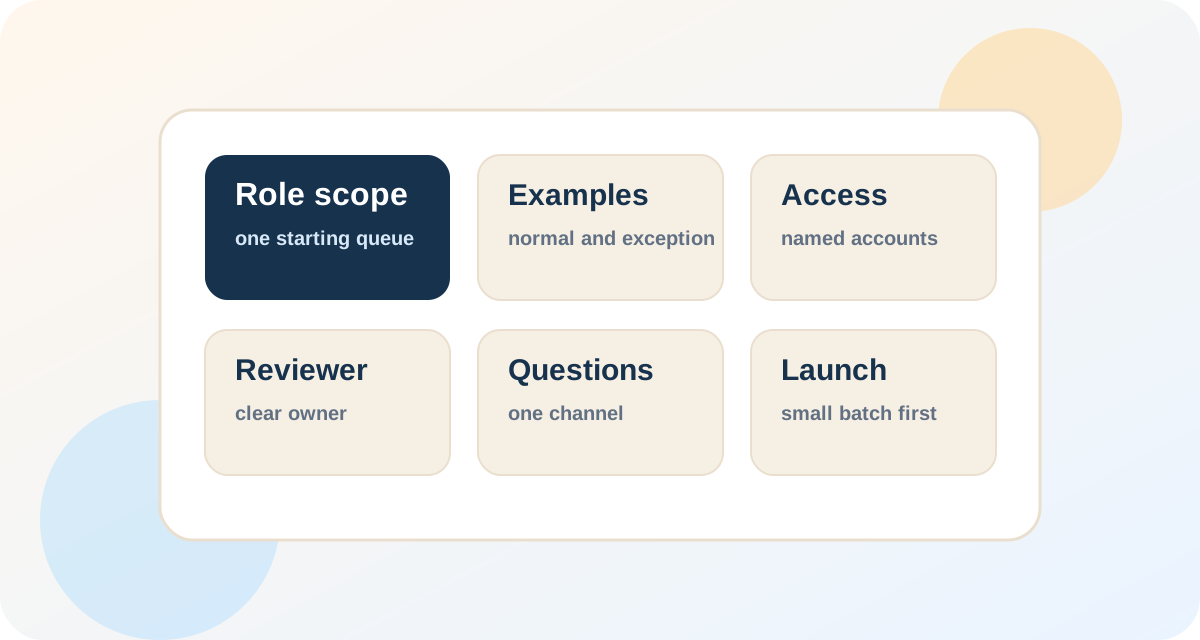
What to settle first
- Define a complete packet and its sources.
- Test ordinary, incomplete, and conflicting records.
- Keep decisions with the privacy or data-request owner.
- Scale only when another reviewer can reproduce the handoff.
Define the record, not just the job title
Start customer data export packet coordination with a visible packet: the request identifier, verified scope state, systems searched, export files, exclusions, redaction state, and release approval. The worker should be able to show where every field came from and mark a gap without guessing.
Write down the entry condition, the finish condition, and the events that send work back to an owner. That turns a broad assistant role into a reviewable routine.
Rehearse the uncomfortable example
The account email matches, but the request asks for records tied to a second household member. Preserve both sources, state the mismatch without choosing a winner, and ask one focused question.
Test this case beside one ordinary record and one incomplete record. Those three examples reveal whether the guide explains what to do or merely describes the happy path.
Make the next handoff legible
A useful note records the last source checked, current state, unresolved difference, waiting owner, and action that remains paused. “Done” or “handled” is too thin for another shift to trust.
Use named accounts, minimum permissions, multifactor authentication where available, and an agreed removal date. Keep sensitive evidence in the approved system rather than copying it into chat.
Review the evidence trail
Sample completed packets against their original sources and track packets paused for identity, scope, search, redaction, or release decisions. Always pair counts with the review window and eligible volume.
Separate missing inputs, transcription mistakes, stale sources, conflicting evidence, unclear instructions, and out-of-scope requests. Different failure modes need different fixes.
Expand only after the routine holds up
Ask a second reviewer to reproduce the status and find the privacy or data-request owner using only the packet and guide. If private context is required, the workflow is not ready to scale.
A new system, audience, data class, or decision changes the work. Review scope and access again before adding it to the lane.
Questions buyers ask
Q: What can the coordinator finish?
A: The coordinator can prepare and route the documented customer data export packet coordination packet.
Q: Who decides an exception?
A: The privacy or data-request owner retains decision and approval authority.
Q: What should the first review cover?
A: Compare an ordinary record, an incomplete record, and the rehearsed conflict with their original sources.