
Philippines hiring guide
How to plan Filipino customer data correction request coordination
Route record-correction evidence with narrow access and a clear privacy-owner decision path.
Short answer
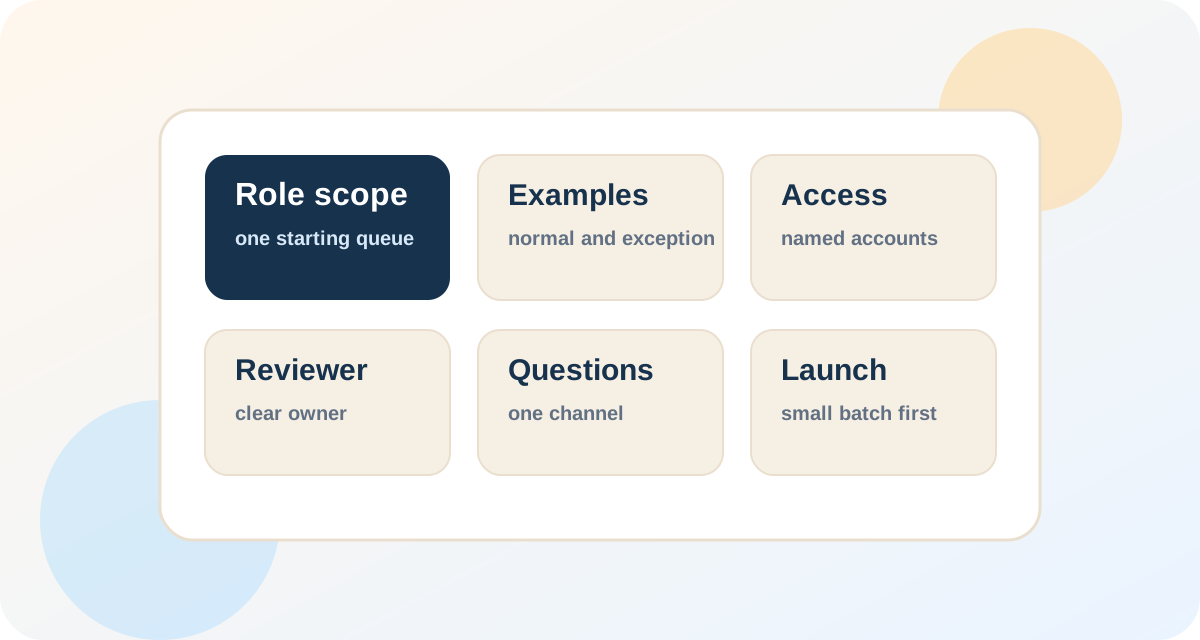
Scope customer data correction request coordination around a finite evidence queue, named access, tested exceptions, and a privacy or data owner who keeps consequential decisions.
What to settle first
- Define the inputs and finish point for customer data correction request coordination.
- Preserve source evidence and disagreements.
- Keep whether identity is sufficient, which record controls, what must change, and what disclosure can be sent with the privacy or data owner.
- Expand only after sampled work is reproducible.
Define the record before assigning the queue
For customer data correction request coordination, write the intake rule around the requester identity-check status, exact field challenged, stated correction, record locations, source provenance, and communication history. The record should preserve the source location and time checked so the reviewer can reproduce the preparation.
A complete intake is not an approved outcome. Name the privacy or data owner beside the fields that require judgment, and keep missing evidence visible rather than filling gaps from memory.
Build a traceable evidence packet
The useful packet contains request as received, verification outcome from the authorized owner, system extracts, change record, and response approval. Preserve original wording when a paraphrase could change the meaning.
When two sources disagree, show both values, their timestamps, and one precise question for the privacy or data owner. The coordinator should not choose the value that makes the queue easier to close.
Practice the difficult case
Test the workflow with this exception: the requested correction conflicts with a controlled transaction record. The example should say what the worker records, what action pauses, and who receives the handoff.
Also test an ordinary item and an incomplete item. Those three samples reveal whether the procedure explains the real work or merely describes an ideal case.
Control access and continuity
Grant named access only to systems needed for customer data correction request coordination. Record purpose, permission level, approver, review date, and the same-day removal step. Avoid shared credentials and uncontrolled exports.
Across Philippine and client working hours, the handoff should state the last verified event, unresolved question, next owner, and approved substitute path. Silence is not approval.
Review and measure the lane honestly
Sample source records, not only the final tracker. Classify corrections as missing evidence, transcription error, stale source, source conflict, weak instruction, or judgment outside the role.
Track requests received, identity checks pending, systems searched, conflicts routed, and corrections confirmed. These are workflow signals, not guarantees of accuracy, savings, compliance, safety, satisfaction, revenue, or another business outcome.
Questions buyers ask
Q: What can the coordinator complete?
A: The coordinator can prepare and route the defined evidence packet using approved systems and examples.
Q: Who owns exceptions?
A: The privacy or data owner owns consequential decisions and any expansion of scope.
Q: What should the first review sample?
A: Review an ordinary item, an incomplete item, and the documented stop case.