
Philippines hiring guide
Create a Role-Change Checklist for a Filipino Team Member
Change duties without carrying obsolete access, authority, measures, or unfinished work into the new role.
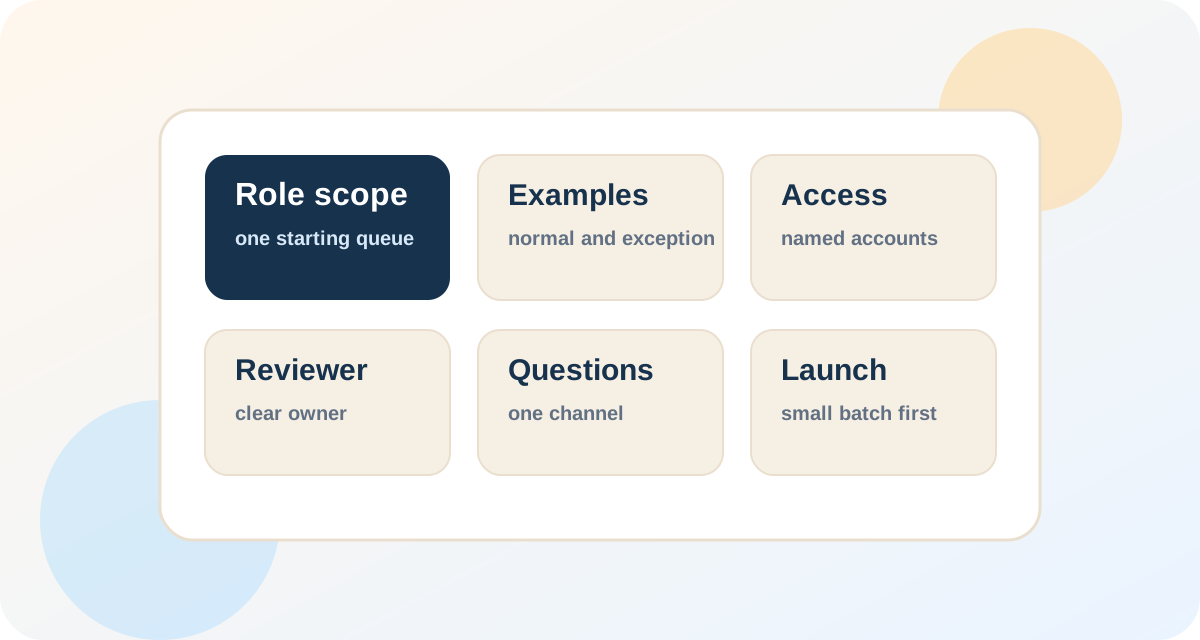
A role change needs more than a revised title. The business must reconcile old and new work, permissions, owners, instructions, and open cases.
Short answer
Use a role-change checklist whenever a Filipino team member gains, loses, or exchanges duties. Compare old and new queues, remove permissions that no longer have a purpose, approve new access separately, transfer open work, retrain on changed decisions, and record when the new scope becomes effective.
What to settle first
- Compare tasks and decisions line by line.
- Treat access as a delta, not a copied profile.
- Close or transfer every open item.
- Test the new role before ending dual running.
Write the old and new roles as operating lanes
Start with the work itself. List the old queue entrance, finish point, systems, data, permitted actions, retained client decisions, review owner, schedule, and measures. Do the same for the proposed role. A title change from executive assistant to renewal coordinator does not explain whether calendar access remains necessary or whether the person may now view customer agreements. Comparing the lanes exposes additions, removals, and ambiguous areas that a job-title update would miss.
Mark tasks that remain unchanged, tasks that stop, and tasks that need a fresh instruction. Then inspect the decisions around them. Preparing meeting options is different from accepting fees or commitments. Assembling renewal history is different from proposing commercial terms. The worker can carry transferable skills into the new lane, but authority does not travel merely because the same person performs both jobs. Name the owner for each consequential decision before the effective date.
Calculate the access delta
Inventory current accounts and permissions, then connect each one to a continuing task. Remove access that has no purpose in the new role. Request new permissions through the normal approval path rather than copying a colleague’s profile. For retained systems, check whether the permission level still fits. A calendar role may need delegate access, while renewal preparation may need read-only contract and usage views but no billing, export, or user-administration rights.
Record the system, account owner, data exposed, approved action, approver, grant time, review date, and removal trigger. Where a temporary overlap is necessary, give it an end event and monitor it. Shared credentials make this reconciliation difficult and should not be used as a shortcut. Republic Act No. 10173 supports assigning responsibility for personal-data handling, which includes knowing why a person retains access after duties change.
Transfer open work before changing the label
Build an inventory of open items in the old queue. Each needs an identifier, current state, source, last action, unanswered question, owner, deadline, and destination. Decide whether the person finishes it, hands it to a named successor, or closes it under an approved rule. Do not leave old work in private messages after the official role changes. The successor should be able to continue from the approved record without calling the former owner for missing context.
Handle recurring commitments as well as visible tickets. Calendar follow-ups, scheduled reports, standing customer updates, saved filters, automations, and delegated mailboxes may keep operating after the title changes. Identify who owns each one and test the transfer. If an automation sends under the worker’s identity or depends on their access, the system owner should adjust it deliberately. A checklist that covers only open tickets can still leave the business with silent obligations.
Retrain where the decision boundary moves
Use cases that distinguish the new role from the old one. For renewal preparation, practice a routine evidence packet, an account with missing agreement data, a conflict between systems, and a request to change commercial terms. The worker should complete the packet, preserve gaps, route conflicts, and stop at the retained decision. Reviewers should score the source and path, not only whether the final document looks polished.
Retire examples that teach the old boundary. A familiar template can be dangerous when one field now has a different owner or consequence. Link each new example to the current instruction and effective date. Ask the worker to explain what they may do, what they must not do, and which evidence travels to the owner. If the answer depends on who happens to be online, the new lane still needs a backup or a safe pause rule.
Limit dual running and conflicting measures
A short overlap can protect continuity, but it needs an end. State which old tasks continue, how much time they may consume, who resolves priority conflicts, and what event closes the overlap. Without those limits, the worker may carry two full jobs while each manager assumes the other queue is secondary. Record workload by queue during the transition so incomplete work is not misread as poor effort in the new role.
Change the scorecard with the scope. Measures built for calendar completion may say little about renewal-packet accuracy or unresolved owner decisions. Define the new population, finish state, exclusions, review sample, and waiting measures. Keep old and new results separate during overlap. A blended average can conceal that one queue is stable while the other lacks sources or reviewer capacity.
Accept the new role with evidence
Close the transition with a dated record. Confirm transferred work, removed and granted access, completed examples, outstanding exceptions, primary and backup owners, schedule, measures, and the effective scope. Ask a reviewer to trace one normal case and one stop case. The role is ready when the record supports the correct action, not when every possible situation has been documented.
Review the change after a defined live period. Look for old access still in use, tasks arriving through informal channels, open work without an owner, repeated questions, and decisions performed outside the approved boundary. Buyers planning executive assistance can use the checklist when a role grows beyond calendars and follow-ups. A planning conversation can then separate the proven lane from the proposed expansion before more authority or access is added.
Include the worker in this review. Ask which old requests still arrive, which new cases lack examples, and where the written boundary differs from what managers request in practice. Preserve the answer as operational evidence rather than treating it as a complaint or informal permission. If demand has expanded, revise the role through the same approval, access, instruction, and acceptance steps instead of letting repeated exceptions create a shadow job.