
Philippines hiring guide
Decide When to Split One Outsourced Queue into Two Roles
Test whether differences in authority, knowledge, schedule, data, or review justify separate operating lanes.
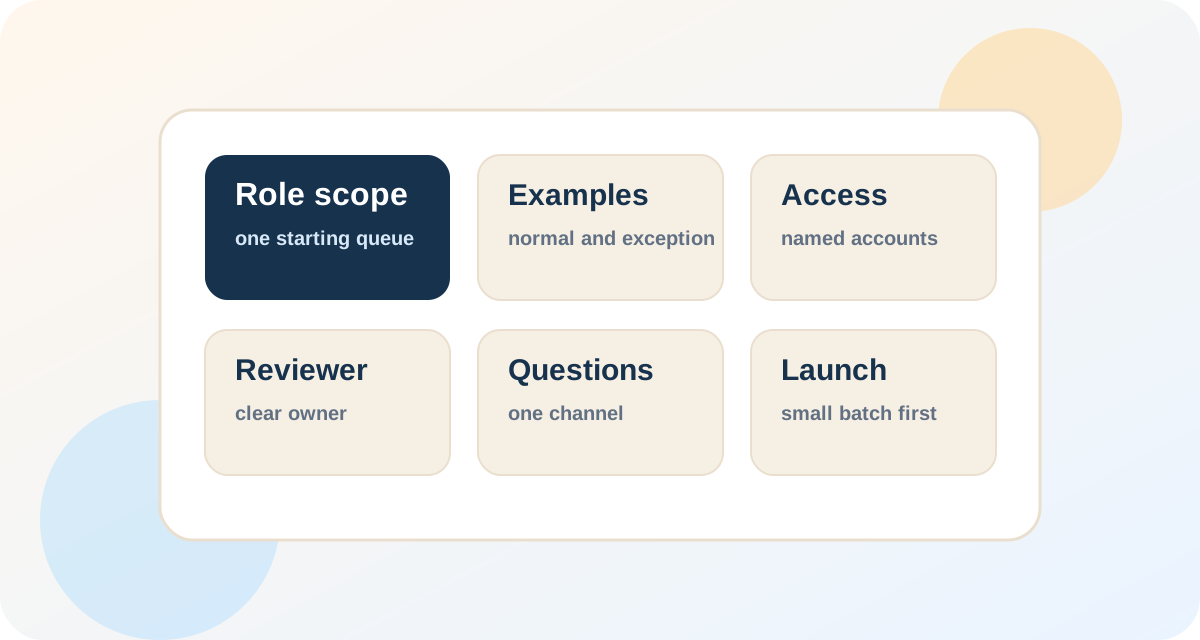
One inbox can hide two jobs. Splitting it may improve control, but only when the boundary is clearer than the coordination cost it creates.
Short answer
Split a queue when case groups require materially different authority, expertise, data access, schedules, or review owners. Test the proposed separation on real arrivals, measure misroutes and handoffs, and keep one intake rule. Do not create two roles merely because volume increased or job titles sound tidy.
What to settle first
- Classify cases before designing roles.
- Separate consequential authority from routine coordination.
- Count handoffs created by the split.
- Pilot both lanes with one shared intake record.
Test five reasons for separation
Compare case groups across authority, knowledge, data, timing, and review. Routine order updates may use approved fulfillment records and standard replies. Disputed-payment cases may expose financial data, require a different reviewer, and stop before any remedy. Overnight coverage may fit one lane while specialist decisions occur in a client window. A split is stronger when several differences point to the same boundary and the cases can be identified consistently.
Volume by itself is not enough. A larger batch of the same work may need more capacity, not a new role. Personal preference is not enough either. Separating easy and difficult work can strand exceptions without an owner while making one lane’s metrics look artificially clean. Write the operating reason for the split and the problem it is meant to solve. Then identify evidence that would show the proposed boundary made matters worse.
Design one intake and two explicit lanes
Keep a shared intake record with the original case, received time, identifier, source, classification evidence, assigned lane, and routing time. Each lane then has its own entrance, permitted actions, stop rules, owner, access, finish state, and measures. Avoid copying the full case into separate trackers. Duplicate records invite inconsistent updates and make it harder to know which state is current. Use links and limited views where the approved systems support them.
For a mixed order inbox, lane one might answer source-backed status requests and collect missing identifiers. Lane two might prepare disputed-payment evidence for a client owner. The second role does not automatically gain refund or payment authority. Its finish may be a complete decision packet and recorded handoff. State this boundary in the role brief, examples, access plan, and review checklist so the job does not expand through urgency.
Count the coordination cost
A split creates routing, handoffs, ownership questions, and possible duplicate contact. Measure how many cases cross lanes, how long routing takes, how often the first classification is corrected, and whether customers repeat information. Include manager time for two instructions, two review samples, and cross-lane exceptions. If most cases require both roles or classification is unstable, the split may add work without improving control.
Define what happens when a case changes state. A routine status request can become a dispute after new evidence arrives. Preserve the original work, route reason, customer communication, and next owner. Do not close one record and create another with no history. Set a rule for which lane communicates externally during transfer so the customer does not receive competing messages. The handoff should reduce ambiguity, not move it between teams.
Pilot the boundary on a mixed case set
Select normal, incomplete, borderline, and consequential cases from the real queue. Have classifiers work independently against the proposed rule, then compare assignments and reasons. Review false routine admissions closely because they may expose authority or data that belongs in the specialist lane. Also inspect false specialist referrals, which can overload reviewers and turn a simple queue into unnecessary escalation.
Run a limited live period with named owners for both lanes. Track routing evidence, reclassification, duplicate work, unanswered cases, review findings, access problems, and customer effort. Do not evaluate the pilot only by each lane’s completion rate. A fast routine lane can coexist with a failing boundary if difficult work accumulates elsewhere. Review the whole arrival population and every transfer between roles.
Choose split, retain, or narrow
Choose the split when the boundary is observable, access can be limited, owners can support both lanes, and the control benefit exceeds the handoff cost. Retain one role when the work uses the same sources, permissions, decisions, and review. Narrow the outsourced lane when routine work is stable but the proposed second role lacks a qualified owner or settled rule. Record the decision, evidence, unresolved cases, and next review trigger.
Review the design when demand, policy, systems, or decision ownership changes. Buyers considering customer support operations and bookkeeping support can use the same mixed-inbox exercise before creating two job descriptions. Bring the case classifications to a planning request. That keeps the conversation focused on real authority and handoffs instead of assuming every crowded queue needs another title.
Document cases that do not fit either lane. Give them a temporary owner, safe state, and deadline for a scope decision. Do not force them into the routine lane to protect a service target or into the specialist lane because it sounds safer. A growing unclassified group is evidence that the boundary needs revision, a third owner, or a narrower promise.
Include the people doing the work in the review. Ask where classifications require hidden context, which handoffs lose customer history, and which permissions are broader than the lane needs. Compare those observations with case evidence before changing the design. A clean diagram can still fail in daily use when the source system does not expose the deciding fact at intake.