
Philippines hiring guide
Plan a Business-Owner Absence Test for an Outsourced Team
Simulate an unavailable owner before leave exposes missing authority, backups, and safe waiting rules.
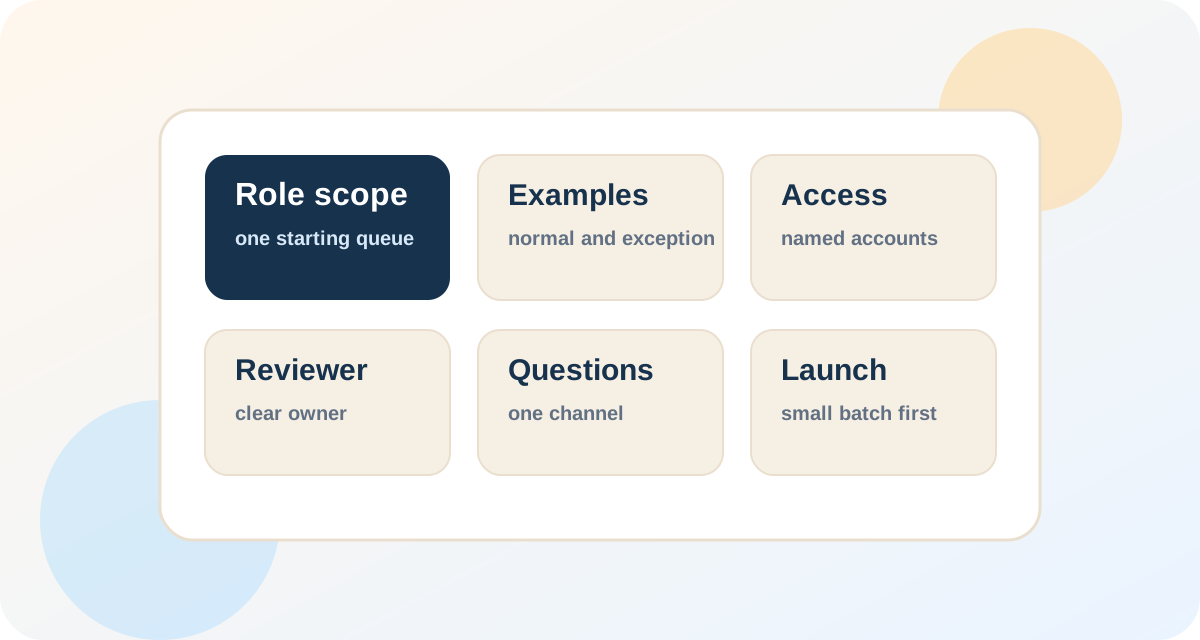
A named owner is not a continuity plan. An absence test shows which work can continue, which must pause, and whether a backup can make the required decisions.
Short answer
Choose a realistic absence window, freeze the normal owner out of routine communication, and run representative cases through the approved workflow. Verify backup authority, source access, response expectations, safe waiting states, and handoff records. Repair failures before relying on the arrangement during real leave.
What to settle first
- Test a real decision path, not contact details alone.
- Distinguish backup availability from backup authority.
- Give paused work a truthful customer and queue state.
- Retest repairs with a case the backup has not seen.
Choose an absence that can expose the design
Define the owner, dates, affected queues, normal decision duties, and known business events. A three-day absence during an invoice and customer-support cycle is more revealing than a quiet afternoon. Include ordinary requests, incomplete evidence, one consequential decision, and a system problem. The exercise should test the work that depends on the owner without inventing an emergency. Tell participants which communication routes remain valid and which person observes the test.
Do not ask the owner to shadow every decision invisibly. That proves the owner can still rescue the process. Instead, agree on a narrow safety override for genuine harm and record if it is used. Routine questions should follow the documented backup or pause path. The test result is the observed path under the planned constraint, not a performance score for individuals learning that the written arrangement was incomplete.
Inventory decisions before naming backups
List the decisions the owner normally makes: customer remedies, payment releases, policy exceptions, access changes, public statements, or acceptance of financial classifications. For each one, record the trigger, required evidence, authority source, response target, and reversible interim actions. Some duties may be delegable for the absence, while others must wait for the primary owner or move to a specialist. The business makes that determination before the test.
A backup is useful only when the person has competence, authority, time, and access for the named decision. Being senior or present in the same chat is not enough. Ask the backup to explain the evidence they expect and the limits of their authority. If they can acknowledge a packet but cannot approve the action, say so. The queue can then distinguish received by backup from decision completed instead of treating acknowledgement as permission.
Prepare safe states for work that cannot continue
For every retained decision, define what the Filipino team member may do while waiting. They may verify records, prevent duplicate handling, prepare a question, send an approved holding response, or continue unrelated items. They may not invent a deadline, remedy, accounting treatment, or permission. Record the case state, decision owner, expiry, next check, and message already sent. The safe state should protect the customer and the business without pretending the underlying issue is resolved.
Make the waiting language truthful. A customer case awaiting remedy approval should not appear as solved because a coordinator responded. An invoice awaiting owner authorization should not enter paid or approved status. A missing source should remain visible rather than being filled with a plausible value. These distinctions keep later reports honest and give the returning owner a reliable list of work that still requires judgment.
Run cases through the normal records
Use the same systems and channels that the team uses in live work. Each test case should carry an identifier, source evidence, current state, question, owner, backup, deadline, and permitted interim action. Do not create a private exercise spreadsheet that bypasses the production handoff design. If the approved system cannot represent the backup or waiting state, that is a finding. Record it rather than hiding the gap in a temporary note.
Observe retrieval time and decision quality separately. A backup may know the right answer but spend forty minutes finding the policy and source records. Another may answer quickly from an obsolete example. The reviewer checks whether the evidence supports the path, whether disclosure stayed within approved systems, and whether downstream records changed correctly. Fast communication does not compensate for an unsupported decision.
Inspect the return handoff
When the primary owner returns, provide a compact register of decisions made, items paused, temporary authority used, customer commitments, access changes, unresolved questions, and deadlines. The owner should be able to trace each entry to its case. Avoid a meeting that relies on participants remembering what happened. The handoff is part of the test because continuity fails if the returning owner cannot distinguish completed work from work merely acknowledged during the absence.
Check temporary measures for expiry. Remove access granted only for coverage, close delegated approvals, and restore normal escalation routes. If a backup decision affected related open cases, identify them for review. Do not reverse a supported decision simply because the primary owner is back, but preserve who decided, under what authority, and which evidence was available. This keeps accountability clear without turning the test into a second approval layer.
Repair and retest one unseen case
Classify failures by cause: missing authority, unavailable source, inadequate permission, unclear instruction, insufficient backup time, or unusable handoff. Assign a repair owner and date. A contact-list edit cannot fix a missing decision mandate, and broader access cannot fix an unclear rule. Change the smallest part that addresses the observed failure, then update the controlled instruction and affected examples.
Retest with a new case that exercises the repaired path. The backup should find the source, state their authority, act or pause correctly, and leave a complete return record without coaching from the primary owner. Buyers reviewing the services overview can use this test before adding overnight or leave coverage to a role. A planning request should name the queue and retained decisions so the coverage promise starts with evidence instead of a vague claim of availability.
Schedule another test when the queue, primary owner, backup, system, or authority source changes. Continuity evidence goes stale when the people or tools behind it change. Keep the last test date, cases used, findings, repairs, retest result, and next trigger in one record. Include any safety override so the next reviewer understands where the planned process needed rescue. Do not present a successful exercise as proof of uninterrupted service. It only shows that the tested paths worked under the stated conditions.