
Philippines hiring guide
Choose a Safe First Live Batch for a Filipino Operations Role
Select real items that expose the workflow without handing over irreversible decisions on day one.
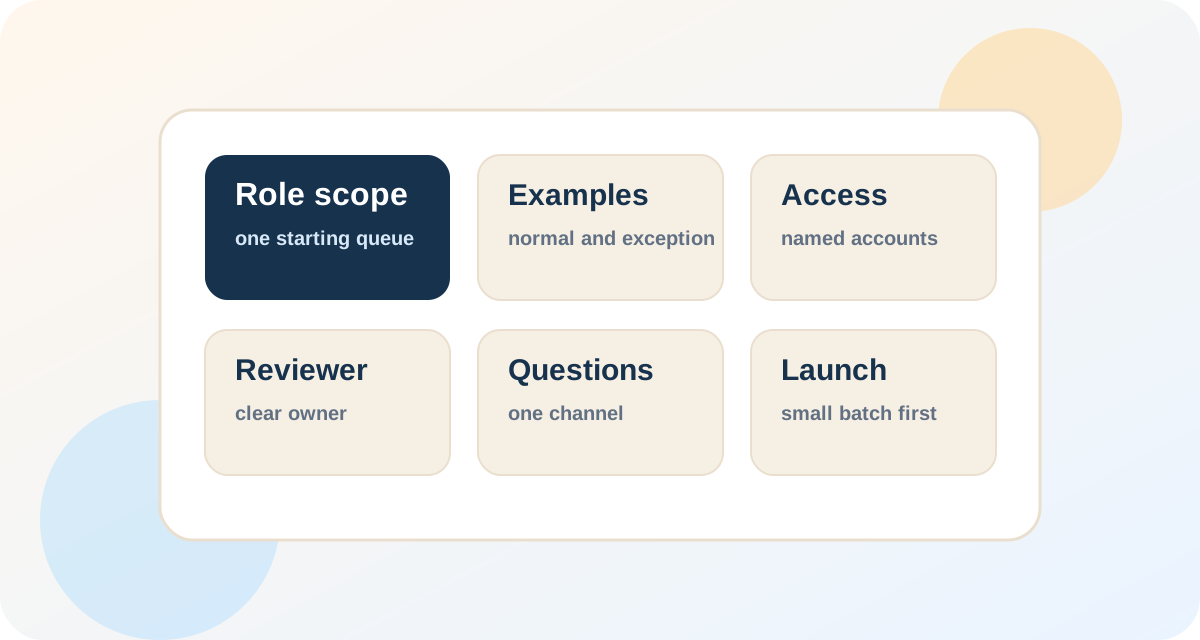
A first batch should be real enough to test the operating design and small enough for a manager to inspect before errors spread.
Short answer
Choose the first live batch by case state, consequence, reversibility, source quality, and owner availability. Include ordinary and incomplete work, but exclude actions that move money, change policy, disclose sensitive data, or create hard-to-reverse customer commitments unless the role and approval path already support them.
What to settle first
- Select cases with explicit admission rules.
- Keep a source snapshot and owner for every item.
- Set stop conditions before live work begins.
- Close the batch with a decision about the workflow, not only the worker.
Define what the batch must prove
The first batch is an operating test, not a miniature production target. Write down the questions it must answer. Can the worker identify eligible items? Do the approved systems contain enough evidence? Are permissions limited to the required actions? Can the client owner answer exceptions inside the promised window? Does a reviewer recover the path from the record? A batch that answers these questions may be useful even when several items pause. Speed alone cannot show whether the design is safe or teachable.
Choose one queue with a clear entrance and finish. A product-catalog cleanup batch might cover description formatting, missing required fields, duplicate candidates, and source conflicts. It should not quietly expand into deciding prices, making legal claims, or publishing unsupported product facts. Name the exact fields and actions in scope, the source that governs each field, and the evidence that marks completion. If managers disagree about those basics, settle the disagreement before asking a new Filipino team member to work live records.
Admit cases by evidence and consequence
Build a short admission checklist. The item must belong to the named queue, carry a unique identifier, expose only approved data, have an accessible governing source, and require only permitted actions. Add exclusion flags for missing authority, active disputes, security concerns, unusual financial effects, or customer promises outside the normal rule. The worker can apply observable flags. The business owner decides whether an excluded category later becomes eligible. This keeps admission separate from the temptation to solve every item that happens to arrive.
Use a mixed candidate pool instead of selecting only polished examples. Twenty catalog records could contain twelve clean updates, three incomplete records, two likely duplicates, two source conflicts, and one price-changing request. Admit the clean items and any incomplete cases whose approved next action is to request or record missing evidence. Exclude the price change and unresolved conflicts unless a qualified owner is present. Keep the selection record so the reviewer can inspect false admission as well as false exclusion.
Prefer reversible work during the first pass
Reversibility changes the cost of learning. Drafting a reply for review is easier to unwind than sending it. Preparing a proposed catalog update is safer than publishing it. Tagging a duplicate candidate for owner review is different from merging customer records. Design the first batch around prepare, compare, classify, and route actions where possible. If the real role must eventually perform live edits, add them only after the evidence path and review step work on representative cases.
Reversible does not mean consequence free. A draft can expose personal data in the wrong system, and a tag can trigger automation. Trace what each action causes downstream. Record whether it sends a notification, changes a queue, feeds a report, starts a payment, or removes information from another user. Test with approved controls rather than assuming the interface label describes the full effect. The system owner should confirm rollback steps before the batch begins, including who may use them.
Set observation and stop conditions in advance
Assign one reviewer who can compare the output with the source and one owner who can answer retained decisions. Define the sample: for a twenty-item batch, the reviewer might inspect every excluded case and a spread of ordinary completions. The exact sample should fit the risk and available capacity. Record defects by cause, such as missed instruction, unclear example, source conflict, access failure, or owner delay. A returned item without a cause teaches little and can push the worker toward guessing what the reviewer wanted.
Stop conditions should be concrete. Pause the batch if access exposes unrelated sensitive records, if the governing source is unavailable, if two owner answers conflict, if an action has an unexpected downstream effect, or if the reviewer cannot keep pace with the agreed sample. Also set a limit for unanswered consequential questions. Stopping is not a failed launch. It prevents a design problem from becoming a larger correction exercise and gives the owner a bounded set of evidence to repair.
Close each item with a retraceable record
For every admitted item, keep the identifier, source checked, original state, permitted action, worker note, resulting state, timestamp, and review outcome. For a paused item, record the missing evidence, question, decision owner, safe state, and next check. Do not copy extra customer or employee information into a convenience sheet. The approved record should contain enough context for another authorized person to continue without reconstructing private chat. This also lets the business compare the batch with the instruction it actually issued.
Review the paths in order, not only the final outputs. A correct field entered from the wrong source is a defect because the same method can fail later. A paused case may be correct when the evidence is incomplete. A fast update may be unacceptable if it bypassed approval. The reviewer should explain what rule applied and preserve corrections in a dated note. If the rule itself changes, identify earlier items that may need another look rather than treating the change as worker error.
Decide whether to continue, narrow, or redesign
End the batch with a recorded decision. Continue when admission, sources, permissions, handoffs, review, and closure worked on the selected mix. Narrow the queue when one case class is stable but another lacks an owner or usable rule. Redesign when the source cannot support the expected action, permissions are too broad, or review demand exceeds client capacity. State which evidence supports the decision, who made it, and what condition will trigger another review. Avoid turning a small clean sample into a promise about future volume or accuracy.
A buyer planning data processing support can bring the candidate pool and admission checklist to a staffing discussion. That conversation can focus on the fields, systems, exclusions, and reviewer rather than a broad job title. The immediate outcome is a safer first batch. Expansion comes later, after the business has evidence that another category has its own source rule, access boundary, owner, and finish point.