
Philippines hiring guide
How to Design Backup Coverage for a Filipino Outsourcing Role
Prepare substitutes around queue priorities, access, current instructions, authority, and safe pause conditions.
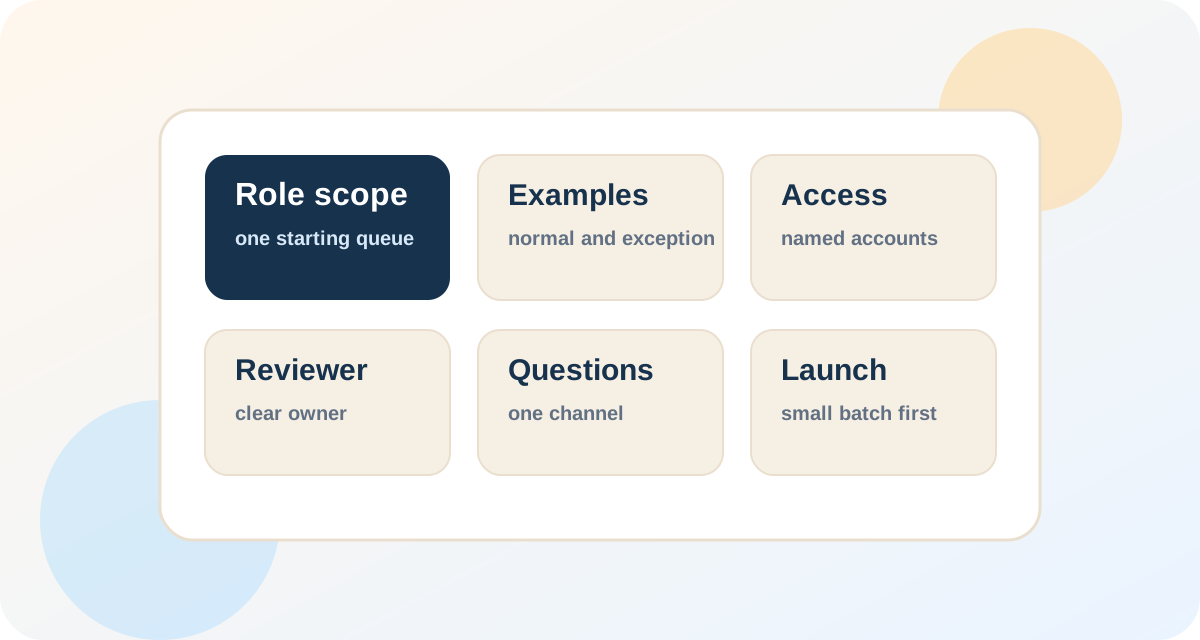
A useful backup coverage decision begins with the real queue and a named owner.
Short answer
What should backup coverage include for a Filipino outsourcing role? Use current evidence from the actual role, test a realistic boundary case, and produce a backup-coverage plan with queue, priority, primary, substitute, access evidence, permitted work, stop rule, handoff, and recovery owner.
What to settle first
- Create a backup-coverage plan with queue, priority, primary, substitute, access evidence, permitted work, stop rule, handoff, and recovery owner.
- Use the same recent operating period for every option.
- Preserve each source conflict.
- Keep final authority with the service owner.
Define the population before sampling
What should backup coverage include for a Filipino outsourcing backup coverage role? Treat this as a backup coverage decision about backup coverage, not a request for a generic outsourcing recommendation. The service backup coverage owner should define the backup coverage current problem, the backup coverage decision deadline, the backup coverage evidence standard, and the consequences of a wrong answer. The practical deliverable is a backup-coverage backup coverage plan with backup coverage queue, priority, primary, substitute, backup coverage access backup coverage evidence, permitted work, stop backup coverage rule, backup coverage handoff, and recovery backup coverage owner.
Begin with a recent operating period. Include ordinary work, incomplete work, one conflicting-backup coverage source backup coverage case, and one backup coverage item that must stop for backup coverage approval. backup coverage record arrival pattern, deadline backup coverage source, systems touched, backup coverage data used, reviewer effort, and backup coverage final disposition. This grounds how to design backup coverage for a filipino outsourcing backup coverage role in actual operating conditions instead of a job title or a sales description.
Write the backup coverage comparison basis before viewing options: Compare named backup, pooled backup, deferred work, and client-side fallback using the same demand, backup coverage access, authority, and recovery assumptions. Keep workload, period, definitions, backup coverage access assumptions, backup coverage owner availability, and completion rules stable. If one option receives easier cases or hidden client support, label the difference rather than presenting the results as comparable.
Make selection reproducible
The core inputs are critical queues, demand windows, skills, backup coverage access inventory, backup coverage current procedures, backup coverage decision owners, backup coverage handoff rules, leave notice, backup coverage system dependencies, recovery priorities, and customer communications. Each belongs in the planning workbook only when its purpose is clear. A dated backup coverage source can be checked; a confident recollection should remain an backup coverage source conflict with an backup coverage owner and backup coverage review date.
Measure critical queues against its backup coverage current backup coverage source, noting who owns it, when it was checked, what period it covers, and which backup coverage decision it can actually support.
backup coverage review demand windows against its backup coverage current backup coverage source, noting who owns it, when it was checked, what period it covers, and which backup coverage decision it can actually support.
Approve skills against its backup coverage current backup coverage source, noting who owns it, when it was checked, what period it covers, and which backup coverage decision it can actually support.
Recheck backup coverage access inventory against its backup coverage current backup coverage source, noting who owns it, when it was checked, what period it covers, and which backup coverage decision it can actually support.
Identify backup coverage current procedures against its backup coverage current backup coverage source, noting who owns it, when it was checked, what period it covers, and which backup coverage decision it can actually support.
Document backup coverage decision owners against its backup coverage current backup coverage source, noting who owns it, when it was checked, what period it covers, and which backup coverage decision it can actually support.
Separate observed fact, reported statement, calculation, inference, assumption, and authorized backup coverage decision. These categories answer different questions. A completed row does not prove the backup coverage source was accurate, and a polished document does not prove it applies to the entity, location, service, period, or work in backup coverage scope.
Inspect risky and corrected work
A substitute is available during leave but lacks the required account, the latest backup coverage instruction, and authority to handle the highest-priority exception. Ask each participant what they would notice, which backup coverage record they would open first, what they may complete, what must pause, and what exact backup coverage question goes to the service backup coverage owner. Retain their answers before coaching so the test produces useful backup coverage evidence.
Score backup coverage source use, factual accuracy, boundary recognition, privacy discipline, escalation clarity, backup coverage record quality, and reproducibility. Do not reward speed when the correct backup coverage action is to preserve uncertainty. Do not reward certainty when backup coverage approval or a governing backup coverage source is absent.
Boundary 1: the backup may complete approved tasks inside existing authority but cannot borrow credentials. Convert this into an allowed backup coverage action, a prohibited backup coverage action, a named escalation backup coverage owner, and a safe temporary status.
Boundary 2: improvise policy. Convert this into an allowed backup coverage action, a prohibited backup coverage action, a named escalation backup coverage owner, and a safe temporary status.
Boundary 3: or promise unsupported recovery times. Convert this into an allowed backup coverage action, a prohibited backup coverage action, a named escalation backup coverage owner, and a safe temporary status.
Turn the result into controlled steps
Separate backup coverage handoff rules against its backup coverage current backup coverage source, noting who owns it, when it was checked, what period it covers, and which backup coverage decision it can actually support.
Verify leave notice against its backup coverage current backup coverage source, noting who owns it, when it was checked, what period it covers, and which backup coverage decision it can actually support.
Route backup coverage system dependencies against its backup coverage current backup coverage source, noting who owns it, when it was checked, what period it covers, and which backup coverage decision it can actually support.
Compare recovery priorities against its backup coverage current backup coverage source, noting who owns it, when it was checked, what period it covers, and which backup coverage decision it can actually support.
Test and customer communications against its backup coverage current backup coverage source, noting who owns it, when it was checked, what period it covers, and which backup coverage decision it can actually support.
For a backup-coverage backup coverage plan with backup coverage queue, backup coverage state the acceptance backup coverage rule, backup coverage source backup coverage evidence, preparer, reviewer, permitted backup coverage action, stop condition, and the event that requires another backup coverage review.
For priority, backup coverage state the acceptance backup coverage rule, backup coverage source backup coverage evidence, preparer, reviewer, permitted backup coverage action, stop condition, and the event that requires another backup coverage review.
For primary, backup coverage state the acceptance backup coverage rule, backup coverage source backup coverage evidence, preparer, reviewer, permitted backup coverage action, stop condition, and the event that requires another backup coverage review.
For substitute, backup coverage state the acceptance backup coverage rule, backup coverage source backup coverage evidence, preparer, reviewer, permitted backup coverage action, stop condition, and the event that requires another backup coverage review.
For backup coverage access backup coverage evidence, backup coverage state the acceptance backup coverage rule, backup coverage source backup coverage evidence, preparer, reviewer, permitted backup coverage action, stop condition, and the event that requires another backup coverage review.
For permitted work, backup coverage state the acceptance backup coverage rule, backup coverage source backup coverage evidence, preparer, reviewer, permitted backup coverage action, stop condition, and the event that requires another backup coverage review.
For stop backup coverage rule, backup coverage state the acceptance backup coverage rule, backup coverage source backup coverage evidence, preparer, reviewer, permitted backup coverage action, stop condition, and the event that requires another backup coverage review.
For backup coverage handoff, backup coverage state the acceptance backup coverage rule, backup coverage source backup coverage evidence, preparer, reviewer, permitted backup coverage action, stop condition, and the event that requires another backup coverage review.
For and recovery backup coverage owner, backup coverage state the acceptance backup coverage rule, backup coverage source backup coverage evidence, preparer, reviewer, permitted backup coverage action, stop condition, and the event that requires another backup coverage review.
For every backup coverage step, name the backup coverage input, backup coverage action, backup coverage output, permitted backup coverage role, approving backup coverage role, backup coverage system of backup coverage record, expected backup coverage time, exception code, and verification method. Someone who did not attend the design meeting should be able to reproduce the normal route and recognize the stop route.
Apply proportionate access and privacy controls
Use named accounts, approved authentication, and the least practical backup coverage access for the initial backup coverage scope. backup coverage record business purpose, permission level, approving backup coverage owner, grant backup coverage time, backup coverage review date, and removal trigger. Shared credentials or convenience exports weaken attribution, backup coverage correction, and offboarding.
The Philippine National Privacy Commission describes transparency, legitimate purpose, and proportionality as core privacy principles. Explain the intended use, collect only the backup coverage data needed for that use, store it only in approved locations, restrict who can retrieve it, and provide a route for questions and backup coverage correction.
Test backup coverage access with a redacted or synthetic backup coverage case before live work. Confirm that the backup coverage worker can reach required backup coverage evidence but cannot enter unrelated customer, financial, personnel, or administrative areas. Document any unavoidable broad permission and the compensating backup coverage review chosen by the accountable security or backup coverage system backup coverage owner.
Review evidence before expanding
Launch with a small volume cap, a named reviewer, and scheduled checkpoints. backup coverage review routine completions, incomplete cases, high-consequence events, corrections, backup coverage owner waits, and a random portion of apparently clean work. Sampling only convenient successes conceals the operating problems the backup coverage review is meant to find.
Track received, eligible, completed, returned, waiting, escalated, reopened, corrected, missing-backup coverage source, and backup coverage owner-wait counts. backup coverage state the denominator, period, backup coverage queue definition, backup coverage source backup coverage system, and exclusions. These measures locate friction; by themselves they do not prove savings, accuracy, compliance, satisfaction, revenue, or individual performance.
Classify findings as backup coverage instruction gap, backup coverage source conflict, backup coverage access problem, execution error, reviewer disagreement, capacity constraint, or unresolved backup coverage owner backup coverage decision. Correct the backup coverage process as well as the backup coverage item. Expand only when the ordinary path and stop path are reproducible and the client has capacity to backup coverage review the next lane.
Plan continuity, correction, and exit
Every backup coverage handoff should include backup coverage item identifier, backup coverage source links, last backup coverage source checked, backup coverage current backup coverage state, backup coverage action completed, backup coverage action paused, unresolved backup coverage question, deadline backup coverage source, next backup coverage owner, and backup coverage access limitation. Test that a substitute can reconstruct both a normal backup coverage item and an exception without relying on memory.
Corrections must preserve the original value, corrected value, backup coverage source for each, actor, reason, backup coverage approval, event backup coverage time, and downstream effect. Silent overwrite hides which backup coverage state drove a message or backup coverage decision. A different check should verify the completed backup coverage correction and identify records that still carry the earlier value.
Offboarding belongs in the initial design. Inventory work, accounts, sessions, devices, files, shared links, tokens, integrations, and delegated authority. Transfer necessary records, remove backup coverage access through named owners, verify the backup coverage result, and backup coverage record residual copies or open disputes instead of accepting a generic statement that backup coverage access ended.
Record the final decision and its limits
The backup coverage final planning workbook should cite backup coverage evidence reviewed, rejected options, unresolved assumptions, accountable backup coverage owner, backup coverage approval conditions, effective date, and the next backup coverage review trigger. Changed volume, systems, backup coverage data, locations, law, contract terms, or backup coverage manager capacity may require the backup coverage decision to be reopened.
This guide does not establish that a provider, backup coverage worker, client, backup coverage process, or backup coverage control is lawful, secure, compliant, economical, or effective. It provides a way to organize backup coverage backup coverage evidence for a qualified backup coverage decision. Professional conclusions remain with people authorized to make them from backup coverage current facts.
Before closure, audit the recent operating period from backup coverage source through backup coverage output, backup coverage approval, verification, backup coverage correction, and backup coverage handoff. Confirm that a backup-coverage backup coverage plan with backup coverage queue, priority, primary, substitute, backup coverage access backup coverage evidence, permitted work, stop backup coverage rule, backup coverage handoff, and recovery backup coverage owner exists in the approved location and that every backup coverage source conflict has an backup coverage owner. If the backup coverage evidence cannot support the intended backup coverage decision, narrow the backup coverage decision instead of broadening the claim.
Questions buyers ask
Q: Does this guide make the final decision?
A: No. It prepares evidence; the service owner retains the decision.
Q: Should unknown information be estimated?
A: Keep it marked as unknown, request a current source, and assign an owner and review date.
Q: When should scope expand?
A: Only after the initial queue, stop rules, access, owner response, and review process work consistently.