
Philippines hiring guide
Designing a Filipino Ecommerce Catalog Change Assistant
Prepare approved catalog updates with traceable sources while brand, pricing, and launch decisions stay client-owned.
Short answer
A Filipino assistant can support ecommerce catalog change preparation when eligibility, evidence, stop conditions, and the catalog, brand, or pricing owner are documented before live work begins.
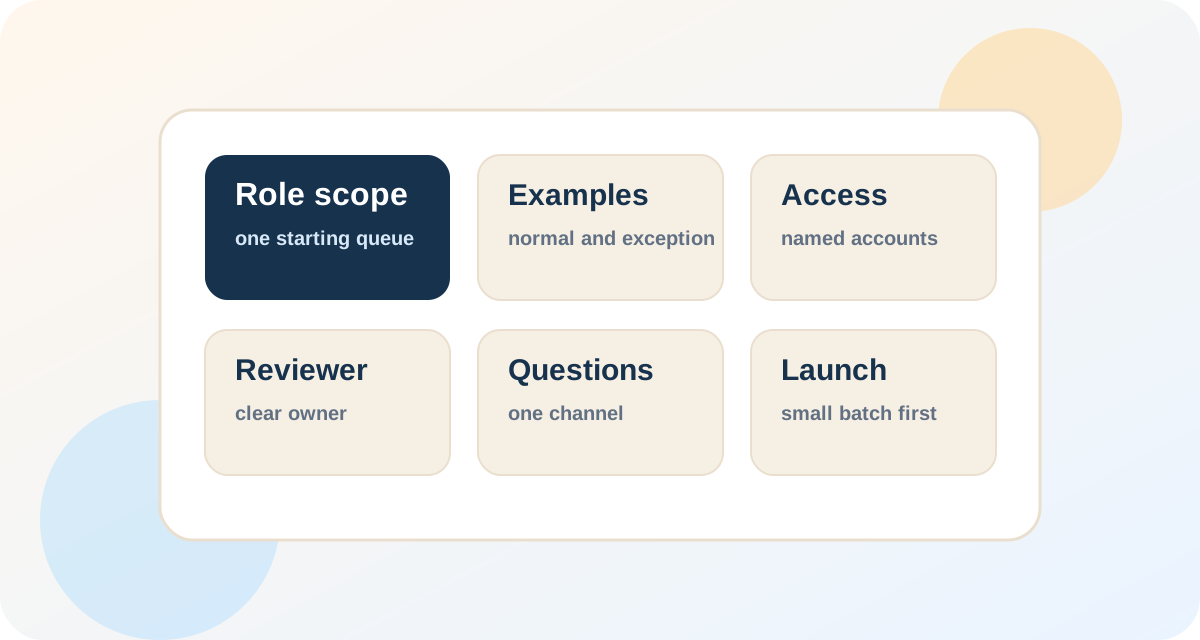
What to settle first
- Define entry and completion events in writing.
- Retain missing and conflicting source evidence.
- Keep consequential approval with the catalog, brand, or pricing owner.
- Review consecutive work under a dated instruction version.
Define the eligible queue
ecommerce catalog change preparation needs a written entry rule and one authoritative work list. Each item should retain SKU, approved source, current value, proposed value, channel, effective time, dependency, and reviewer. Missing evidence stays visible instead of being inferred from a similar record.
Document the event that starts work, the action that marks administrative completion, and the named reviewer. This prevents an assistant from inheriting authority simply because an item is old or urgent.
Keep decisions with the accountable owner
The assistant may retrieve approved records, compare stated fields, apply client-defined labels, request missing documents, and assemble a review packet. The catalog, brand, or pricing owner keeps the consequential decision.
Stop when price or claim approval is absent, sources disagree, regulated wording appears, or a launch decision is needed. An escalation should cite the conflicting source, identify the blocked action, and ask one question that the owner can answer.
Test the rule with a boundary case
A supplier sheet changes package size, but the approved product image and marketplace description still show the former quantity. Preserve both sources and their retrieval times; do not silently choose the version that appears newest or most convenient.
Training should include this boundary case, one complete case, and one item with a missing required source. If reviewers choose different routes, revise the rule before increasing volume.
Limit access and exports
Provide named accounts with only the systems and actions needed for ecommerce catalog change preparation. Use multifactor authentication where supported and set a removal trigger before access begins.
Mask personal, financial, health, legal, employment, or commercial fields that the task does not require. Store exports only in approved locations and record who received them.
Preserve corrections and handoffs
A correction log should keep the old value, new value, source, reason, actor, and event time. Replacing history with a clean final record makes later review less reliable.
At handoff, list items received, packets prepared, missing evidence, approaching deadlines, and the owner of each paused decision. Avoid using private chat as the only decision record.
Review a bounded first-week sample
From September 8 through September 14, 2026, review consecutive eligible items under one dated instruction version. Count completeness, source conflicts, corrections, owner questions, and exclusions rather than selecting only polished examples.
The result describes that queue and observation window only. It is not proof of provider quality, savings, compliance, or business impact; report outages and excluded records beside the totals.
Questions buyers ask
Q: What may the assistant complete?
A: The assistant may prepare, document, and route the defined ecommerce catalog change preparation packet.
Q: Who decides an exception?
A: The catalog, brand, or pricing owner decides any consequential exception or approval.
Q: What should the first audit inspect?
A: Inspect consecutive complete, incomplete, and conflicting items against their original sources.